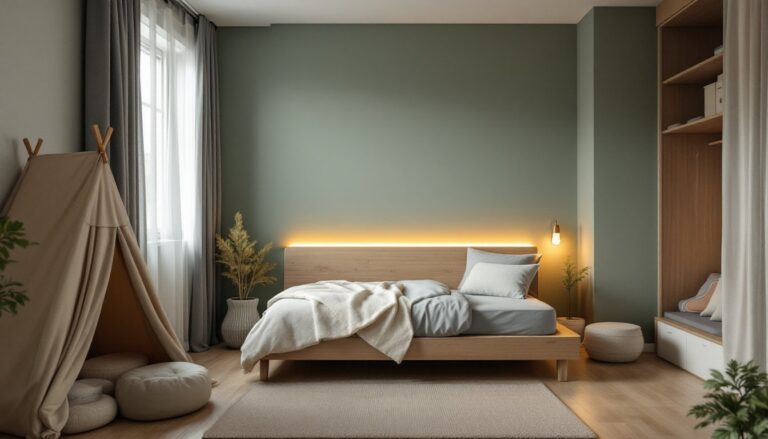
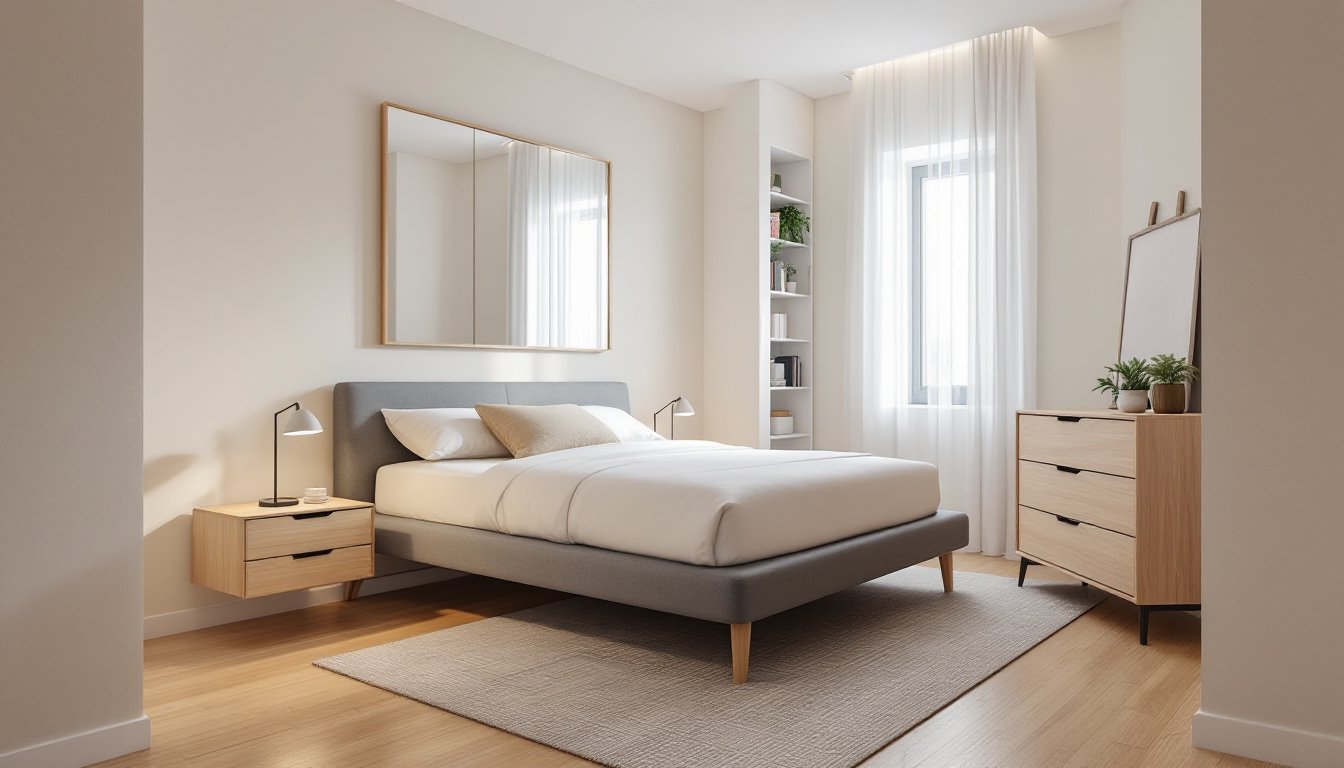
Squeezing a functional bedroom into 80 or 100 square feet isn’t just about buying smaller furniture, it’s about understanding how every piece relates to the walls, door swing, and traffic flow. A poorly planned small bedroom feels cramped no matter how much you declutter, while a well-thought-out layout can make even a tiny bedroom ideas space feel open and livable. This guide walks through the placement strategies, storage tricks, and visual techniques that help homeowners and renters get the most out of compact sleeping quarters without sacrificing comfort or style.
Table of Contents
ToggleKey Takeaways
- A well-planned small bedroom layout prioritizes traffic flow, functional clearance, and visual balance—requiring at least 24 inches of side clearance and 36 inches in front of dressers for comfortable use.
- Anchor furniture placement around the bed as your largest piece, positioning it against the longest uninterrupted wall to maximize usable floor space in your small bedroom layout.
- Maximize vertical storage through under-bed drawers, floating shelves, wall-mounted organizers, and dual-purpose furniture like storage benches and ottomans to keep floors clear and clutter-free.
- Visual tricks such as light wall colors, oversized mirrors, furniture with exposed legs, and floor-to-ceiling curtains create the illusion of a larger, more open room without adding square footage.
- Adapt your small bedroom layout to room shape—rectangular rooms need beds on short walls, square rooms offer more flexibility, and L-shaped or angled rooms benefit from alcove placement and corner solutions.
Why Smart Layout Planning Matters in Small Bedrooms
In small spaces, every square foot counts, and wasted space often comes from furniture placement, not the furniture itself. A king bed shoved against one wall can block a closet door or create an awkward 18-inch gap that’s too narrow to use. Thoughtful layout planning addresses three core issues: traffic flow, functional clearance, and visual balance.
Traffic flow means leaving enough room to move comfortably between the bed, dresser, and door. The standard recommendation is a minimum 24-inch clearance on at least one side of the bed and 36 inches in front of dressers or closets for drawer access. In very small bedroom ideas scenarios, those numbers might shrink to 18 inches, but anything less starts to feel obstructive.
Functional clearance refers to the space needed for doors, drawers, and closet access. Measure door swing arcs and drawer extension before committing to furniture placement. A nightstand might fit in a corner on paper, but if the closet door can’t open past 45 degrees, it’s unusable.
Visual balance prevents the room from feeling lopsided. Placing all tall furniture on one wall while leaving the opposite side empty creates an unbalanced, boxy look. Distributing visual weight, even if it’s just a tall mirror or narrow shelving unit, helps the room feel more proportionate.
Skipping the layout stage and just “eyeballing it” during move-in often leads to furniture rearrangements later, scratched floors, and frustration. Spending 20 minutes with graph paper or a free room planner app saves hours of heavy lifting.
Essential Furniture Placement Strategies for Compact Spaces
The first rule of small bedroom decor is to measure everything, twice. Note the room’s dimensions, door swing, window placement, electrical outlets, and any radiators or vents. Then measure your bed frame, nightstands, dresser, and any other essential pieces. Don’t rely on product descriptions: actual dimensions often differ from nominal sizes, especially with upholstered furniture.
Anchor with the bed first. It’s the largest piece and dictates where everything else goes. In most small bedroom design ideas for small rooms, the bed should go against the longest uninterrupted wall to maximize floor space elsewhere. Avoid floating the bed in the center unless the room is an unusual shape, it eats up clearance on all sides.
Use low-profile furniture. A platform bed without a bulky headboard or footboard takes up the same floor space as a traditional frame but creates less visual mass. Dressers with wide, shallow drawers (36 inches wide, 18 inches deep) offer more storage per square foot than tall, narrow units and keep sightlines open.
Limit freestanding furniture. Each additional piece, armchair, vanity, bookshelf, reduces usable floor space. Prioritize multi-function items: a bench with lift-up storage, a nightstand with shelves, or a wall-mounted desk that folds down. If you need seating, consider a small upholstered ottoman that doubles as a footrest and storage bin.
Respect the “triangle rule.” In bedroom design help circles, this means keeping the bed, dresser, and closet accessible without walking around obstacles. If you have to navigate around the bed to reach the closet every morning, the layout isn’t working.
Bed Positioning Options That Open Up Your Room
Where you place the bed has the biggest impact on how the room feels and functions. Here are four common bedroom remodel ideas configurations:
Against the longest wall (centered or offset): This is the go-to for rectangular rooms. Centering the bed creates symmetry and leaves space for matching nightstands. Offsetting it (pushed closer to one corner) can free up a larger work or seating zone on the opposite side.
In a corner (daybed style): For very tight spaces under 70 square feet, pushing the bed into a corner and adding bolster pillows can make it feel like a daybed or lounge. This works best with a twin or full mattress and opens up the rest of the room for a small desk or dresser.
Under a window: Many people avoid this because of drafts or radiator placement, but if your window is well-sealed and you don’t have a bulky headboard, it’s a viable option. Just ensure curtains or blinds can still operate and that the bed doesn’t block the window entirely for emergency egress (check local fire codes).
Floating (perpendicular to a wall): In oddly shaped or square rooms, placing the bed perpendicular to the longest wall can create distinct zones, sleeping on one side, dressing or working on the other. This only works if you have at least 10 feet of width to maintain clearance on both sides.
Avoid placing the bed directly in line with the door if possible. It can feel exposed and disrupts the room’s flow. If that’s the only option, use a folding screen or tall plant to create a visual buffer.
Creative Storage Solutions That Don’t Sacrifice Floor Space
Small bedroom storage ideas focus on vertical space, hidden compartments, and dual-purpose furniture. The goal is to keep the floor as clear as possible while still housing clothes, shoes, bedding, and personal items.
Under-bed storage is the easiest win. Platform beds with built-in drawers or lift-up frames add 10-15 cubic feet of storage without taking up any additional square footage. If you have a standard bed frame, use low-profile rolling bins (6-8 inches tall) for off-season clothing or extra linens. Measure the clearance first, some bed frames sit lower than expected once the mattress is on.
Wall-mounted shelves and floating nightstands eliminate the need for floor-standing furniture. A floating shelf 10-12 inches deep can hold a lamp, phone, and book without the visual bulk of a traditional nightstand. Install shelves above the bed, around doorways, or in the “dead” corner space that’s too narrow for furniture.
Vertical organizers make use of closet height. Double-hang rods (one at 40 inches, one at 80 inches) double your hanging capacity for shirts and pants. Shelf dividers and hanging organizers keep folded items tidy without requiring a dresser. If you’re tight on closet space, many affordable storage hacks involve repurposing modular systems or tension rods.
Over-door hooks and racks add storage for bags, robes, or jewelry without any installation beyond a hanging bracket. They’re especially useful in rentals where wall mounting isn’t allowed.
Furniture with hidden compartments: Ottomans, benches, and headboards with built-in cubbies keep everyday clutter out of sight. For tiny bedroom ideas layouts, a storage headboard can replace a nightstand entirely, holding books, glasses, and a phone charger in recessed shelves.
Avoid freestanding wardrobes or armoires unless absolutely necessary, they’re space hogs. If you need one, choose a narrow model (24 inches deep max) with mirrored doors to add function and reflect light.
Layout Configurations for Different Small Bedroom Shapes
Not all small bedrooms are created equal. A 9×10 rectangle behaves differently than an 8×8 square or a narrow 7×12 galley-style room. Here’s how to adapt your layout to common shapes.
Rectangular rooms (narrow and long): Place the bed on the short wall to avoid a bowling alley effect. If the room is 7 feet wide, a full or queen bed will leave minimal side clearance, consider a Murphy bed or wall-mounted fold-down desk to reclaim floor space during the day. Use the long wall for a low dresser or floating shelf to maintain flow.
Square rooms (8×8 to 10×10): These offer more layout flexibility. Centering the bed on one wall and flanking it with narrow nightstands creates symmetry. Alternatively, place the bed in one corner and use the opposite corner for a compact desk or reading chair. Square rooms benefit from area rugs to define zones and break up the boxy feel.
L-shaped or angled rooms: These oddball spaces often have alcoves or angled walls. Use the alcove for the bed (if it’s deep enough) and the main space for a dresser or seating. Angled walls can accommodate corner shelves or a small vanity that wouldn’t fit along a standard wall.
Rooms with awkward features (sloped ceilings, bay windows, radiators): Work around them, don’t fight them. A sloped ceiling may limit headboard height but can accommodate low storage or a built-in reading nook. Bay windows create a natural spot for a bench with storage underneath. Radiators need 6-12 inches of clearance, don’t block them with furniture, as it reduces heating efficiency and can be a fire hazard.
Measure all obstacles, closet doors, radiator placement, light switches, before finalizing your modern bedroom decor layout. Graph paper or a digital planner like Floorplanner or RoomSketcher helps visualize these constraints.
Visual Tricks to Make Your Small Bedroom Feel Larger
Layout planning isn’t just about furniture fit, it’s also about perception. A well-arranged small bedroom can feel open and airy with a few deliberate design choices.
Use light, neutral wall colors. Whites, soft grays, and pale blues reflect more light than dark or saturated hues, making walls feel farther away. If you prefer color, save bold tones for an accent wall behind the bed rather than all four walls.
Install oversized mirrors. A full-length mirror on the closet door or a large wall mirror opposite a window doubles the perceived space and bounces natural light around the room. Leaning a floor mirror against the wall (secured with brackets) is a renter-friendly alternative to wall mounting.
Choose furniture with exposed legs. Pieces that sit on visible legs (rather than solid bases) create visual breathing room by showing more floor. A bed frame with 6-inch legs or a dresser on tapered legs feels lighter than a platform or skirted design.
Limit pattern and texture overload. A busy duvet, patterned rug, and wallpaper all compete for attention and make the room feel cluttered. Stick to one or two patterned elements and keep the rest simple. Solid bedding in a light color keeps the focus on the room’s architecture, not the textiles.
Maximize natural light. Skip heavy drapes in favor of sheer curtains or top-down/bottom-up shades that let light in while maintaining privacy. If you have limited window space, consider a full-spectrum LED bulb in a ceiling fixture to mimic daylight.
Use vertical lines. Floor-to-ceiling curtains, tall narrow shelving, or vertical paneling draw the eye upward and create the illusion of higher ceilings. Many design inspiration galleries showcase how vertical elements impact small bedroom interior design.
Keep decor minimal. Each decorative object, picture frame, plant, candle, takes up visual bandwidth. Choose a few meaningful pieces rather than filling every surface. Wall-mounted planters and floating shelves keep decor off the floor and nightstands.
Opt for multi-functional lighting. Wall sconces or pendant lights free up nightstand space and add ambient lighting without floor lamps. Dimmer switches let you adjust brightness for different tasks, reducing the need for multiple light sources.
These simple bedroom interior design tricks won’t add square footage, but they’ll make the space feel more open and less confined. Combine them with smart furniture placement, and even a 70-square-foot room can feel comfortable and functional. For more ideas on decorating a bedroom without overwhelming it, many small space living resources offer room tours and budget-friendly bedroom decorating ideas.
Conclusion
A successful small bedroom layout isn’t about cramming in less furniture, it’s about placing the right pieces in the right spots and using vertical space, hidden storage, and visual tricks to make every inch count. Measure carefully, plan for clearances, and don’t be afraid to test a layout for a few days before committing. Small bedrooms can be just as comfortable and stylish as larger ones when the layout supports how the space is actually used.