A bachelor bedroom isn’t just a place to crash, it’s a retreat that reflects personal style while serving multiple functions. Unlike shared spaces, a bachelor bedroom offers the freedom to prioritize individual needs without compromise. Whether it’s a minimalist sanctuary, an industrial-inspired loft aesthetic, or a tech-friendly entertainment zone, the key lies in balancing function with intentional design choices. This guide walks through practical strategies for creating a bachelor bedroom that looks sharp, works hard, and feels like home.
Table of Contents
ToggleKey Takeaways
- Bachelor bedroom ideas should balance function with intentional design, prioritizing sleep quality, storage efficiency, and multi-use capability as structural decisions.
- Invest in a proper bed frame with headboard, dual-purpose furniture zones (workspace, reading nook, or gym area), and climate control through blackout curtains or acoustic panels for comfort.
- Choose sophisticated color schemes like charcoal, navy, or deep green as a base, paired with warm neutrals and natural wood tones to avoid a sterile feel, especially in rooms with limited natural light.
- Maximize storage with double-hang closet rods, slim velvet hangers, under-bed bins with wheels, and vertical wall storage like floating shelves or pegboards to prevent clutter accumulation.
- Layer your lighting with task lighting (2700-3000K LED bulbs), ambient lighting via torchiere lamps or ceiling fans, and accent lighting with LED strips on separate switches for flexibility between cleaning, working, and relaxing.
- Add personal touches through framed photography or album covers, textured textiles in coordinating colors, low-maintenance plants, and functional decor pieces that serve a purpose while adding character to the space.
Essential Elements of a Well-Designed Bachelor Bedroom
A functional bachelor bedroom starts with three core priorities: sleep quality, storage efficiency, and multi-use capability. These aren’t decorative flourishes, they’re structural decisions that determine how well the space performs.
First, invest in a proper bed frame with a headboard. It anchors the room visually and provides back support for reading or laptop work. Skip the box spring if using a platform bed: just confirm the slat spacing is 3 inches or less to prevent mattress sagging.
Second, plan for dual-purpose zones. A bachelor bedroom often doubles as a workspace, reading nook, or even a small home gym. Define these areas with furniture placement rather than room dividers, a desk perpendicular to the bed, a compact bench at the foot for dumbbell storage, or a reading chair in the corner with a floor lamp.
Third, control acoustics and climate. Add blackout curtains or cellular shades for light control and insulation. If the room shares a wall with noisy neighbors or common areas, consider hanging a thick wool rug or acoustic panels. Comfort isn’t just aesthetic, it’s environmental.
Color Schemes That Define Masculine Style
Color sets the tone before a single piece of furniture arrives. Masculine palettes don’t mean defaulting to gray and black, they mean choosing hues with intention and restraint.
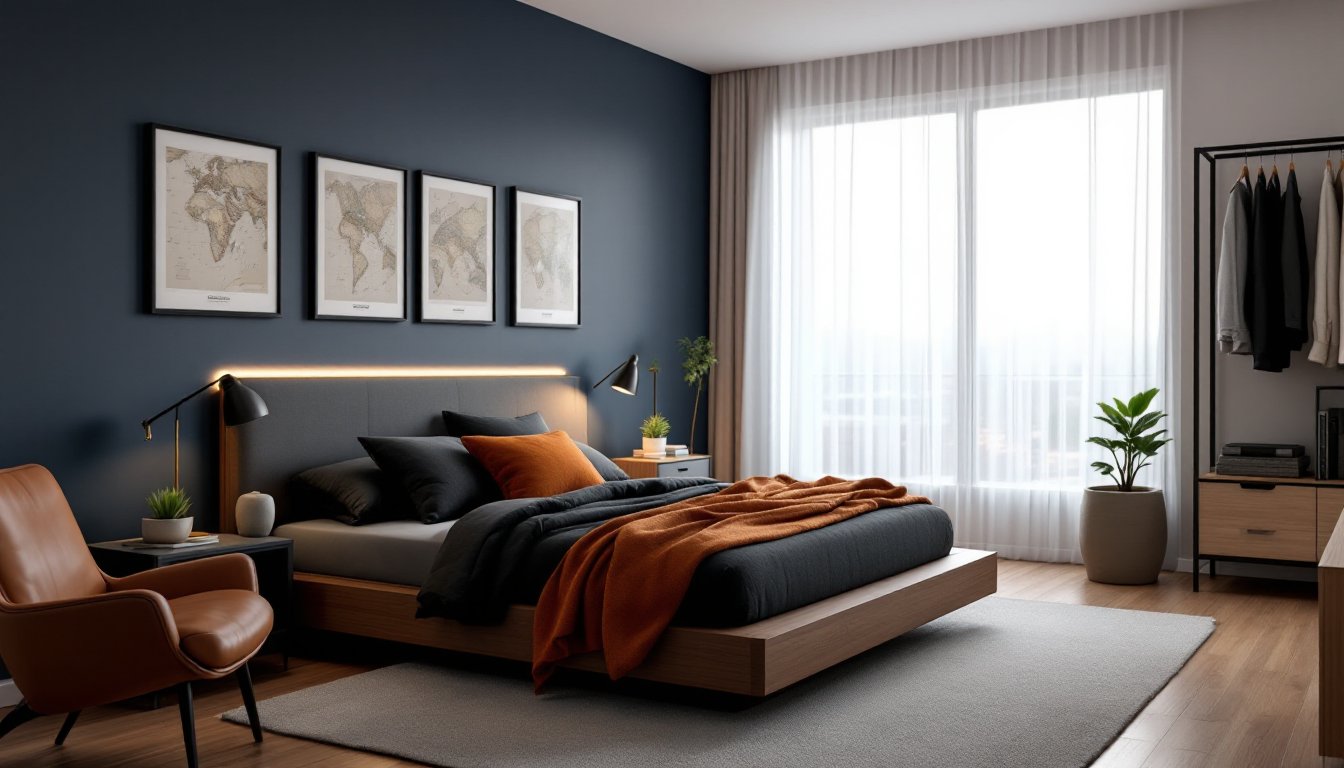
Charcoal, navy, and deep green create a grounded, sophisticated base. Paint the walls in a matte or eggshell finish: flat paint shows every scuff, and high-gloss reads too commercial for a bedroom. A single accent wall in a darker shade adds depth without overwhelming the space, try this behind the bed or on the wall opposite the windows.
Warm neutrals like taupe, camel, or warm gray soften industrial or minimalist aesthetics. Pair these with natural wood tones (walnut, oak, or teak) to avoid a sterile feel. If the room lacks natural light, skip cool grays: they’ll read as dingy. Warmer tones reflect light better.
For accent colors, think burnt orange, rust, or olive. Use these sparingly in textiles, throw pillows, a wool blanket, or a single upholstered chair. Avoid trendy accent walls in bold colors: they date quickly and limit future flexibility. Many small space living ideas emphasize how color zoning can make compact rooms feel intentional rather than cramped.
When selecting paint, budget for premium coverage. Quality interior latex typically covers 350-400 square feet per gallon with one coat. Cheap paint requires multiple coats and still looks thin.
Furniture Selection for Function and Style
Furniture in a bachelor bedroom should work harder than it does in a traditional bedroom. Every piece needs to justify its footprint.
Start with the bed. A queen or full size fits most spaces without dominating the floor plan. Platform beds with integrated storage drawers eliminate the need for separate dressers. Look for solid wood or metal frames: particle board beds sag and creak within a year. If buying upholstered, choose performance fabric or leather, linen headboards stain easily.
Next, skip the matching bedroom set. They’re overpriced and lack personality. Instead, mix materials: a wood bed frame, a metal nightstand, and a vintage dresser create visual interest without looking cluttered. When selecting bedroom furniture, focus on ideas for decorating a bedroom that balance proportion and scale.
Nightstands should have at least one drawer and enough surface area for a lamp, phone, and water glass. Wall-mounted floating shelves work if floor space is tight, but they limit storage. Avoid glass-top nightstands, they scratch and show every fingerprint.
For seating, a compact armchair or upholstered bench adds functionality without crowding the room. Choose pieces that slide under desks or tuck into corners when not in use. If space allows, a small desk with built-in cable management supports remote work better than working from bed.
Smart Storage Solutions for Bachelor Living
Storage is where most bachelor bedrooms fail. Clothes pile on chairs, shoes gather by the door, and miscellaneous gear overtakes every flat surface. Fix this with intentional systems, not more furniture.
Closet organization comes first. Install a double-hang closet rod system to maximize vertical space, short-hang rods at 40 inches and 80 inches double capacity for shirts and pants. Add slim velvet hangers: they prevent clothes from sliding off and take up 50% less space than plastic or wire hangers. Use shelf dividers to stack sweaters without toppling.
If the closet is shallow or poorly designed, consider a freestanding wardrobe or armoire. These work well in older homes with minimal built-in storage. Look for pieces with both hanging space and shelves.
For items that don’t belong in the closet, gym gear, seasonal clothes, extra bedding, use under-bed storage bins. Choose bins with wheels for easy access. Clear bins help locate contents quickly: fabric bins look cleaner but require labeling.
Vertical wall storage handles everyday items without eating floor space. Install floating shelves for books, a wall-mounted valet for jackets and bags, or pegboard for hats and accessories. Keep it intentional, wall storage turns into visual clutter fast if overloaded.
Lighting Design to Set the Perfect Mood
Lighting transforms a bachelor bedroom from functional to intentional. Most rental and builder-grade bedrooms rely on a single overhead fixture, this creates harsh shadows and zero ambiance. Layer lighting instead.
Start with task lighting near functional zones. A swing-arm wall sconce or adjustable desk lamp provides focused light for reading or working without disturbing the rest of the room. Choose LED bulbs in the 2700-3000K range for warm, non-clinical light. Avoid cool white (5000K+): it mimics office lighting and disrupts sleep cycles.
Next, add ambient lighting for overall illumination. If there’s no ceiling fixture, use a torchiere floor lamp with a dimmer. This bounces light off the ceiling for even, indirect coverage. Alternatively, install a ceiling fan with an integrated light kit, these move air and provide general lighting without requiring separate electrical boxes.
Accent lighting creates mood. LED strip lights behind the headboard or under floating shelves add subtle glow without taking up space. Smart bulbs allow color and brightness adjustments via phone, which is useful for winding down before sleep. Projects involving lighting upgrades benefit from consulting budget home renovation stories to see how others have tackled similar electrical updates.
Always install lighting on separate switches or circuits. This allows flexibility, overhead for cleaning, task for working, accent for relaxing. Avoid relying on a single switch that controls everything.
Personal Touches and Decor That Make It Yours
Personal touches separate a well-decorated bachelor bedroom from a hotel room. These details don’t require a big budget, they require intention.
Start with wall art. Skip generic motivational posters or mass-produced prints. Instead, frame personal photography, vintage maps, or album covers. Use matching frames in black, wood, or metal for cohesion. Hang art at eye level (57-60 inches to the center), and group smaller pieces in clusters rather than scattering them.
Textiles add warmth without permanent commitment. Layer the bed with a textured duvet, a lightweight throw blanket, and two standard pillows plus two accent pillows. Stick to two or three coordinating colors to avoid a chaotic look. Swap out pillowcases seasonally for an easy refresh.
Greenery improves air quality and softens hard lines. Low-maintenance plants like snake plants, pothos, or ZZ plants thrive in bedrooms with minimal natural light. Use ceramic or concrete planters instead of plastic, they’re heavier and less likely to tip.
Incorporate functional decor like a vintage alarm clock, a leather tray for pocket items, or a wood valet stand. These pieces serve a purpose while adding character. Many tips from home decor inspiration sources emphasize how functional objects often make the best decor.
Finally, control clutter with a one-in, one-out rule. Every new item should replace something old. This prevents accumulation and keeps the space intentional.
Conclusion
A well-designed bachelor bedroom balances style with function, prioritizing sleep quality, smart storage, and intentional decor. By focusing on layered lighting, purposeful furniture, and personal touches, the space becomes more than a bedroom, it’s a retreat that supports work, rest, and everything in between. Start with the essentials, build in flexibility, and refine over time.