Bay windows are architectural workhorses. They expand sight lines, add square footage to a room’s feel, and flood interiors with natural light. But when frames rot, seals fail, or drafts whistle through old panes, they become energy vampires that cost more to heat and cool than they’re worth. Whether your existing bay is structurally compromised or just aesthetically outdated, replacement opens the door to modern energy performance, fresh styling, and smarter use of that protruding alcove. This guide walks through replacement triggers, current design trends, material trade-offs, interior finishing ideas, and what different budgets buy in 2026.
Table of Contents
ToggleKey Takeaways
- Visible wood rot, failed seals, condensation between panes, and rising energy bills are clear signs that bay window replacement will improve both structural integrity and thermal performance.
- Modern bay window replacement options range from traditional multi-panel designs and contemporary floor-to-ceiling glass styles to material choices including vinyl, fiberglass, wood, and aluminum, each offering different trade-offs in cost, durability, and aesthetics.
- Built-in seating, custom shelving, strategic lighting, and greenery maximize the alcove’s functionality and visual impact while custom curtain track systems address the unique angles of a bay window.
- Budget expectations span from $1,500–$3,500 for stock vinyl installations to $8,000–$15,000+ for architect-grade designs with structural modifications and premium finishes.
- Permits are mandatory for bay window replacement in most jurisdictions, and professional installation is strongly recommended due to the weight of units (150–250 pounds) and complexity of flashing, insulation, and structural work.
- Regional factors like hurricane codes, seismic requirements, and climate conditions can add 15–25% to material costs and influence the choice between triple-pane, low-E, or specialized glazing options.
Why Replace Your Bay Window? Signs It’s Time for an Upgrade
Visible rot around the sill, jamb, or header is the clearest red flag. Bay windows carry more structural load than flat units because they cantilever outward: compromised framing can lead to sagging or even collapse. Press a screwdriver into the wood around the bay’s base, if it sinks easily, replacement is non-negotiable.
Condensation between panes signals failed insulated glass units (IGUs). Once the argon or krypton gas escapes and moisture infiltrates, thermal performance tanks. Replacing just the glass is sometimes possible, but if the window is more than fifteen years old, a full swap often makes more financial sense.
High energy bills tied to specific rooms often trace back to single-pane glass or leaky weatherstripping. Modern triple-pane, low-E coated glass can drop heat transfer by 50% compared to units installed before 2000. That’s a measurable difference in HVAC runtime.
Difficult operation matters if your bay includes operable casement or double-hung sashes. Crank mechanisms that strip, sashes that bind, or locks that don’t latch create security and ventilation headaches. Once hardware starts failing across multiple sashes, labor to repair individual pieces quickly rivals the cost of a new unit.
Outdated style is subjective but valid. Brass grids, dark anodized aluminum, or chunky vinyl mullions date a home instantly. Replacing the bay is often the most dramatic visual update per dollar in a living room or primary bedroom.
Modern Bay Window Styles to Consider for Your Replacement
Traditional Multi-Panel Bay Windows
The classic three-lite or four-lite configuration remains the most popular replacement choice. A fixed center pane flanked by operable casement or double-hung sashes balances ventilation, light, and structural simplicity. Standard projection depth runs 16 to 24 inches, but custom builds can push to 36 inches if you want a deeper window seat.
Angles matter. The most common bay uses 30° or 45° side panels. A 30° bay looks more subtle from the exterior and fits tighter lot lines: 45° bays create a more dramatic interior nook. Box bays (90° angles) technically qualify but read more contemporary and lose some of the classic curve.
Grids are optional. True divided lites (TDL) with individual glass panes offer authentic charm but cost more and complicate cleaning. Simulated divided lites (SDL), grids sandwiched between panes or applied to surfaces, deliver the look without the maintenance for a fraction of the cost. Most stock units ship with grids-between-glass that you can remove if you prefer a clean, modern look.
Contemporary Floor-to-Ceiling Glass Designs
If maximizing daylight and view is the priority, floor-to-ceiling bays are gaining traction in 2026. These designs extend the bay from a few inches above finish floor all the way to the ceiling line, often using minimal frame profiles in aluminum or fiberglass.
Structural requirements escalate. A full-height bay demands a dedicated header or steel lintel to carry the load above, and local building codes may require engineered drawings. Expect a structural engineer’s stamp if the opening exceeds 6 feet wide or if you’re removing a load-bearing stud.
These units almost always feature fixed glass for the lower section to meet fall-protection requirements, tempered or laminated glazing below 18 inches from the floor is typically mandated by the International Residential Code (IRC). Operable sashes sit higher, which can complicate ventilation control but keeps sight lines uninterrupted.
Energy performance is critical. More glass means more thermal bridging, so triple-pane low-E becomes essential rather than optional. Budget an extra 20–30% over standard bay pricing for the added glass area and reinforced framing.
Window Material Options: Choosing What Works Best for You
Vinyl dominates the replacement market because it’s affordable, low-maintenance, and delivers respectable thermal performance. Fusion-welded corners resist air infiltration, and multi-chamber extrusions stiffen the frame enough for most residential bays. Downsides: limited color options (white, almond, tan), potential for warping in extreme heat, and a less refined aesthetic. Expect to pay $800–$1,800 per three-lite bay window unit, not including installation.
Fiberglass costs more but outperforms vinyl in strength-to-weight ratio and thermal expansion. Pultrusion manufacturing creates frames that won’t warp, and factory finishes accept paint if you want custom colors. Fiberglass bays handle wider spans and deeper projections without supplemental bracing. Price range: $1,500–$3,200 per unit.
Wood offers unmatched interior warmth and the ability to stain or paint to exact specs. Clad options, aluminum or vinyl exterior, wood interior, give you curb appeal durability and interior beauty. Trade-offs include higher cost, periodic refinishing on unclad surfaces, and susceptibility to rot if water intrusion occurs. Budget $2,000–$4,500 for a quality wood or clad-wood bay.
Aluminum is the go-to for contemporary, narrow-profile designs. It’s strong, recyclable, and accepts powder-coat finishes in virtually any color. Thermal performance lags unless frames include polyurethane thermal breaks. Aluminum bays shine in modern or industrial interiors where thin sight lines matter. Pricing overlaps with fiberglass: $1,400–$3,000.
PPE reminder: Cutting any frame material generates dust or shavings. Wear safety glasses and a dust mask, especially when trimming fiberglass or aluminum, which can produce sharp particles.
Creative Interior Design Ideas for Your New Bay Window
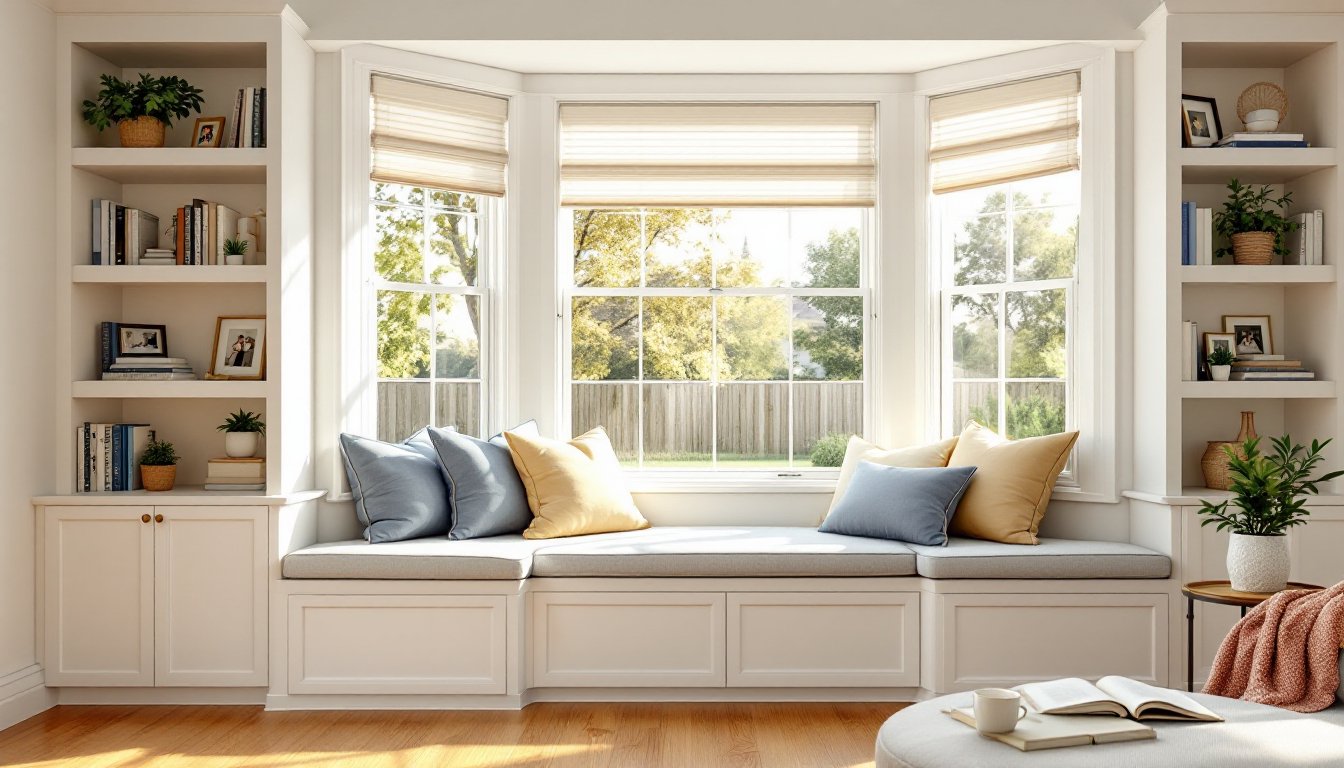
A bay window’s projecting alcove is wasted if you just shove a couch against it. Built-in seating transforms the space into a functional nook. Frame a bench along the bay’s width using 2×4 or 2×6 framing, install a plywood deck, then top it with a custom cushion cut to match the bay’s angles. Add drawers or lift-top storage underneath to stash seasonal linens or kids’ toys.
Window seats work best when the sill height sits 16 to 20 inches off the floor, standard bench depth. If your replacement bay has a higher sill, you’ll need to build up the platform or accept bar-height seating, which reads awkward in most rooms.
Shelving flanks are another high-return move. Run floor-to-ceiling shelves on either side of the bay to create a library feel or display zone. Use 1×10 or 1×12 boards on adjustable shelf pins so you can reconfigure heights as needs change. Paint or stain to match trim for a cohesive look.
Lighting inside the bay adds drama after dark. Recessed LED puck lights mounted in the bay’s ceiling (if there’s a roof overhang above) or under-cabinet strip lights along a top valance cast a warm glow on seating or plants. Battery-powered options work if running electrical is a headache.
Greenery thrives in the extra light. Tier potted plants on a narrow shelf that follows the bay’s curve, or hang planters from ceiling-mounted hooks. South- or west-facing bays can get intense afternoon sun, so choose heat-tolerant species like succulents or snake plants if that’s your orientation.
Curtains and shades need custom solutions. Standard traverse rods don’t follow angles well. Flexible track systems (like Umbra Twilight or Pottery Barn’s bay-window hardware) bend to the bay’s shape, or mount individual rods on each window section. Cellular shades cut to fit each pane offer excellent insulation and a clean look when raised.
Budget-Friendly vs. Premium Replacement: What to Expect
Budget tier ($1,500–$3,500 total): Stock vinyl three-lite bay from a big-box retailer, builder-grade double-pane glass with basic low-E coating, DIY or handyman installation. This approach works if the existing rough opening is standard size and framing is sound. You’ll handle interior trim yourself and accept limited color/grid options. Cost guides for mid-range markets peg material-plus-labor around $2,200–$2,800 for a straightforward swap.
Mid-range ($4,000–$7,500): Custom-sized fiberglass or clad-wood bay, triple-pane glass with argon fill and spectrally selective low-E, professional installation including flashing, insulation, and interior/exterior trim. The installer pulls a permit, coordinates inspections, and warranties both product and labor. Expect two to three days of work, one for demo and rough-in, another for final set and trim, plus a half-day for paint touch-up.
Premium ($8,000–$15,000+): Architect-grade wood or aluminum bay with floor-to-ceiling glass, triple-pane with krypton or vacuum glazing, structural engineering for modified framing, and integrated smart-glass or motorized shades. Installation may involve a structural carpenter, window specialist, and finish carpenter working in sequence. Custom exterior copper or standing-seam roofing over the bay, interior millwork like paneled seat fronts, and high-end paint finishes push costs into this range.
Permits are almost always required for bay window replacement because you’re altering the building envelope and potentially modifying framing. Permit fees run $150–$500 depending on jurisdiction. Skipping the permit saves money short-term but creates resale and insurance liability if an inspector flags unpermitted work during a future sale.
Regional variables matter. Coastal zones with hurricane or seismic codes demand impact-rated glass or additional anchoring, adding 15–25% to material costs. Cold-climate builds benefit from triple-pane and insulated headers, while hot-dry regions prioritize solar-control coatings and UV blocking.
Safety note: Bay window replacement involves working at height (often from a ladder or scaffold on the exterior) and handling large, heavy units. A three-lite bay with glass can weigh 150–250 pounds. This is a two-person minimum job. If you’re not comfortable on a ladder or lack the tools to support the unit during installation, hire a pro. Dropping a bay window through improper bracing can cause serious injury and expensive damage. Always wear work gloves and steel-toe boots when handling glass and frames, and use fall protection if working above the first story.