Baskets aren’t just for storage anymore. When mounted on walls, they become textured, three-dimensional art that brings warmth and character to any room. Unlike flat prints or paintings, woven baskets add depth and tactile interest, and they’re incredibly versatile. From bohemian living rooms to modern farmhouse kitchens, basket wall decor works across design styles and budgets. Plus, installation is straightforward: most displays require only basic hanging hardware and a few minutes of planning. Whether working with vintage finds from a thrift shop or new seagrass pieces, homeowners can create custom wall arrangements that feel collected and intentional.
Table of Contents
ToggleKey Takeaways
- Basket wall decor creates textured, three-dimensional art that adds warmth and character across design styles while remaining affordable at $50–$150 for a complete display.
- Choose shallow baskets (1–3 inches deep) in materials like seagrass, rattan, or jute, prioritizing finished backs and mixing natural tones like tan, beige, and honey to create visual depth without clashing.
- Plan basket arrangements before installation by laying pieces on the floor, spacing them 2–4 inches apart, and using painter’s tape and a level for precise placement, especially with geometric patterns.
- Install baskets securely using appropriate hardware based on wall type: standard picture hooks for pieces under 2 pounds, wall anchors for drywall, and studs when available for maximum stability.
- Room-specific arrangements enhance functionality—large displays work in living rooms, tight clusters in kitchens, vertical stacks in entryways, and smaller groupings in bedrooms to maintain a restful atmosphere.
Why Basket Wall Decor Is Trending Right Now
The shift toward natural materials in interior design has made basket wall displays a go-to solution for empty walls. Woven pieces introduce organic texture without the maintenance of living plants or the permanence of wallpaper. They’re lightweight, easy to swap out seasonally, and work in spaces where heavier art might feel out of place.
Another factor: affordability. While original art can run hundreds or thousands of dollars, a striking basket wall can be assembled for $50–$150 depending on basket size and quantity. Thrift stores, estate sales, and import shops often stock woven baskets for $5–$20 each. Many homeowners building bedroom design schemes appreciate how basket walls add visual interest without committing to a specific color palette.
Baskets also solve the «what goes on that big blank wall» problem common in entryways, stairwells, and above furniture. Their irregular shapes and varying depths create movement and shadow play that changes throughout the day as natural light shifts, something flat decor can’t replicate.
How to Choose the Right Baskets for Your Wall Display
Start with material and weave. Seagrass, rattan, bamboo, jute, and sweetgrass each have distinct textures and durability. Seagrass baskets tend to be sturdy with a tight weave and neutral tan color. Rattan offers more variation in tone and a looser, more organic pattern. Jute baskets are softer and best suited for low-traffic areas where they won’t be bumped.
For wall mounting, flat or shallow baskets work better than deep storage baskets. Look for pieces 1–3 inches deep with a diameter between 10–24 inches. Bowls, trays, and wall plates designed to hang are ideal. Avoid heavy, thick-walled baskets that will create installation challenges and may require reinforced anchors.
Color coordination matters less than texture variety. Mixing natural tones, cream, beige, tan, honey, and cocoa, creates dimension without clashing. If the space leans modern, consider all-white painted baskets or monochrome black for a graphic effect. Some DIYers enjoy painting basket rims in coordinating accent colors, though this works best with simpler weaves.
Pay attention to backing and edges. Baskets with finished backs (no exposed weave ends or rough edges) hang more cleanly. If sourcing vintage pieces, check for damage: loose weave, broken spokes, or mildew stains are red flags. Most baskets can be cleaned with a damp cloth and mild soap, but deeply soiled pieces may not be worth the effort.
Creative Basket Wall Arrangement Ideas
Gallery Wall Style
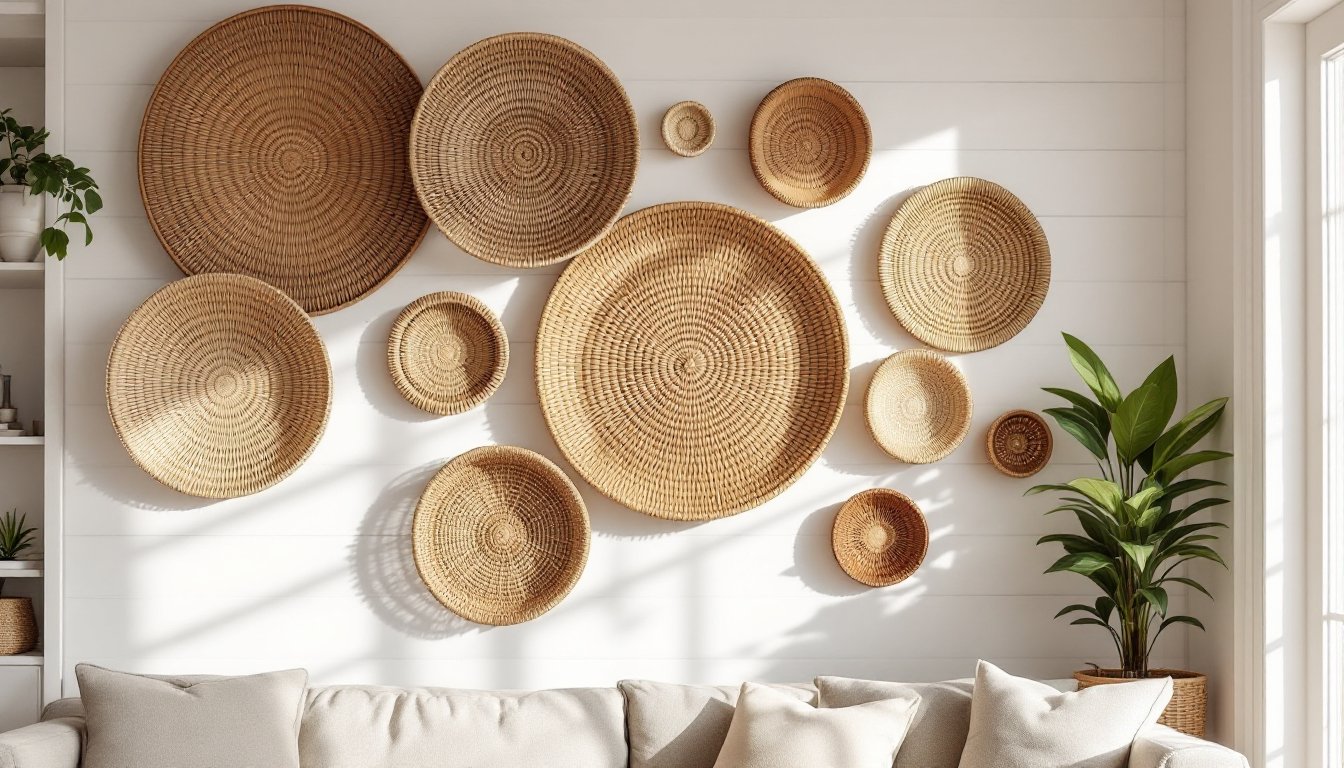
Treat baskets like you would framed art. Start with a large anchor piece (18–24 inches) positioned slightly off-center or at eye level. Build out from there using smaller baskets in varying sizes: a few 12–14 inch mediums and several 8–10 inch accent pieces.
Layout planning is critical. Before driving a single nail, arrange baskets on the floor in the same configuration you’ll use on the wall. Snap a photo for reference. Aim for 2–4 inches of space between each basket, closer spacing feels cluttered, wider spacing loses cohesion.
Incorporate other elements for interest. Small mirrors, wood signs, or framed botanical prints can break up the basket repetition. Platforms like Making Manzanita often showcase mixed-media gallery walls that balance woven textures with painted or printed pieces.
Maintain visual balance by distributing sizes and tones evenly. Avoid clustering all large baskets on one side or grouping similar colors together. Step back every few pieces during installation to check proportions.
Symmetrical and Geometric Patterns
For a more structured look, arrange baskets in grids or mirrored layouts. A 3×3 grid of identical or graduated baskets creates a modern, orderly display, perfect for dining rooms or offices. Use painter’s tape and a laser level to mark exact placement before hanging.
Diamond or honeycomb patterns work well with hexagonal baskets. Position one basket as the center point, then build outward in a symmetrical pattern. This approach requires precision: measure the distance between basket centers and keep spacing consistent.
Odd numbers tend to feel more dynamic than even. A row of five baskets above a console table or three large rounds flanking a window both create intentional focal points. When working with symmetry, identical basket sizes simplify installation and maintain clean lines.
Room-by-Room Basket Wall Decor Inspiration
Living rooms can handle larger, more dramatic displays. A statement wall behind the sofa using 15–20 baskets in a curated mix of sizes becomes the room’s focal point. Pair with neutral furniture so the wall doesn’t compete with other patterns. Designers at Young House Love frequently use basket walls to add texture to minimalist spaces without overwhelming the room.
Kitchens and dining areas benefit from smaller, tighter arrangements. A cluster of 3–5 baskets above open shelving or flanking a window adds warmth without encroaching on functional wall space. In eat-in kitchens, a vertical column of graduated baskets beside a doorway makes use of otherwise dead space.
Entryways and hallways are ideal for narrow vertical arrangements. Stack 4–6 baskets of decreasing size from floor to ceiling, or create a horizontal line at picture-rail height. These spaces often lack natural light, so lighter-toned baskets prevent the area from feeling cave-like.
Bedrooms work well with softer, more organic layouts. Position baskets above the headboard or on a side wall opposite windows to catch morning light. Keep displays smaller here, 5–9 pieces, to maintain a restful atmosphere. Jute and seagrass baskets complement bedding textures without adding visual noise.
Bathrooms require careful material selection. High humidity can damage natural fibers over time, so ensure adequate ventilation. Smaller baskets (6–10 inches) work best in these compact spaces. Position away from direct shower spray. Sealed rattan or painted baskets hold up better than untreated jute in moist environments.
How to Hang Baskets on Your Wall Safely and Securely
Most baskets under 2 pounds can hang on standard picture hooks rated for 5–10 pounds. For heavier pieces or groupings, use wall anchors appropriate to the wall type. Drywall requires plastic anchors or toggle bolts: plaster needs specialized plaster hooks. If hitting a stud (located every 16 inches on center in most homes), a basic finish nail or screw provides the strongest hold.
Many imported baskets come with pre-attached loops or wire hangers on the back. Test these before trusting them with the basket’s full weight, some are decorative rather than structural. If the existing hanger feels flimsy, add a sawtooth hanger or D-ring secured with small screws through the basket weave into a backing board.
For baskets without built-in hangers, create a simple solution with plate hangers (spring-loaded wire discs) or adhesive picture hooks rated for the basket’s weight. Adhesive hooks work on smooth wall surfaces and remove cleanly, making them ideal for renters. But, they’re not suitable for textured walls or high-humidity areas.
Use a stud finder and level for precise placement, especially with geometric arrangements. Mark all hanging points with painter’s tape before making holes. For gallery-style layouts, start with the center or anchor basket and work outward. This approach allows for adjustments without redundant holes.
Safety note: Wear safety glasses when drilling into walls, particularly plaster or concrete, to protect against dust and debris. If working above head height on a ladder, have a second person steady the base.
Resources like The Spruce Crafts offer detailed tutorials on various hanging methods for woven decor, including no-damage options for rental properties. Test each basket after hanging by gently tugging downward, it shouldn’t shift or pull away from the wall. Periodically inspect hangers and anchors, especially in homes with active children or pets who might bump the display.