The wall behind a couch is often the largest uninterrupted vertical surface in a living room, and the most neglected. It’s visible from every angle, anchors the seating area, and sets the tone for the entire space. Whether dealing with a sofa floating in the middle of the room or one pushed against a wall, that expanse above the cushions needs more than a single frame hung at random. Smart wall decor balances scale, function, and style without overwhelming the room or the budget.
Table of Contents
ToggleKey Takeaways
- Behind couch wall decor should span at least two-thirds of the sofa’s width and sit 6 to 12 inches above the couch back to maintain proper visual proportion.
- A gallery wall requires intentional planning with uniform spacing of 2 to 3 inches and center alignment at 57 to 60 inches from the floor for professional results.
- Oversized artwork between 60 inches wide works best for a 90-inch sofa, while heavier framed pieces over 50 pounds require mounting into wall studs or French cleat systems.
- Floating shelves installed at varying heights and staggered lengths create visual interest while providing functional storage for seasonal decor rotation without overwhelming the space.
- Lightweight textile options like macramé, woven art, and tapestries offer renters an easy, damage-free way to add warmth and texture to wall space behind sofas.
Why the Wall Behind Your Couch Matters
The wall behind a couch acts as a visual anchor. It grounds the furniture arrangement and influences how the rest of the room feels, cramped, balanced, or deliberately sparse.
From a design standpoint, this wall should relate proportionally to the sofa’s width and height. A standard three-seat sofa runs 84 to 96 inches wide, so decor needs to span at least two-thirds of that width to avoid looking lost. Height matters, too: artwork or shelving should sit 6 to 12 inches above the sofa back to maintain visual connection without crowding.
Ignoring this wall creates dead space. Overloading it with mismatched frames or undersized art has the same effect. The goal is intentional composition, whether that’s a single oversized piece, a curated gallery grid, or functional shelving that doubles as display space.
Consider sightlines. The wall behind the couch is visible from entryways, dining areas, and opposite seating. It’s one of the first things guests see, so it’s worth getting right.
Gallery Wall Arrangements for Behind the Sofa
A gallery wall works when it’s planned, not improvised. Random spacing and mismatched frames read as clutter, not curation.
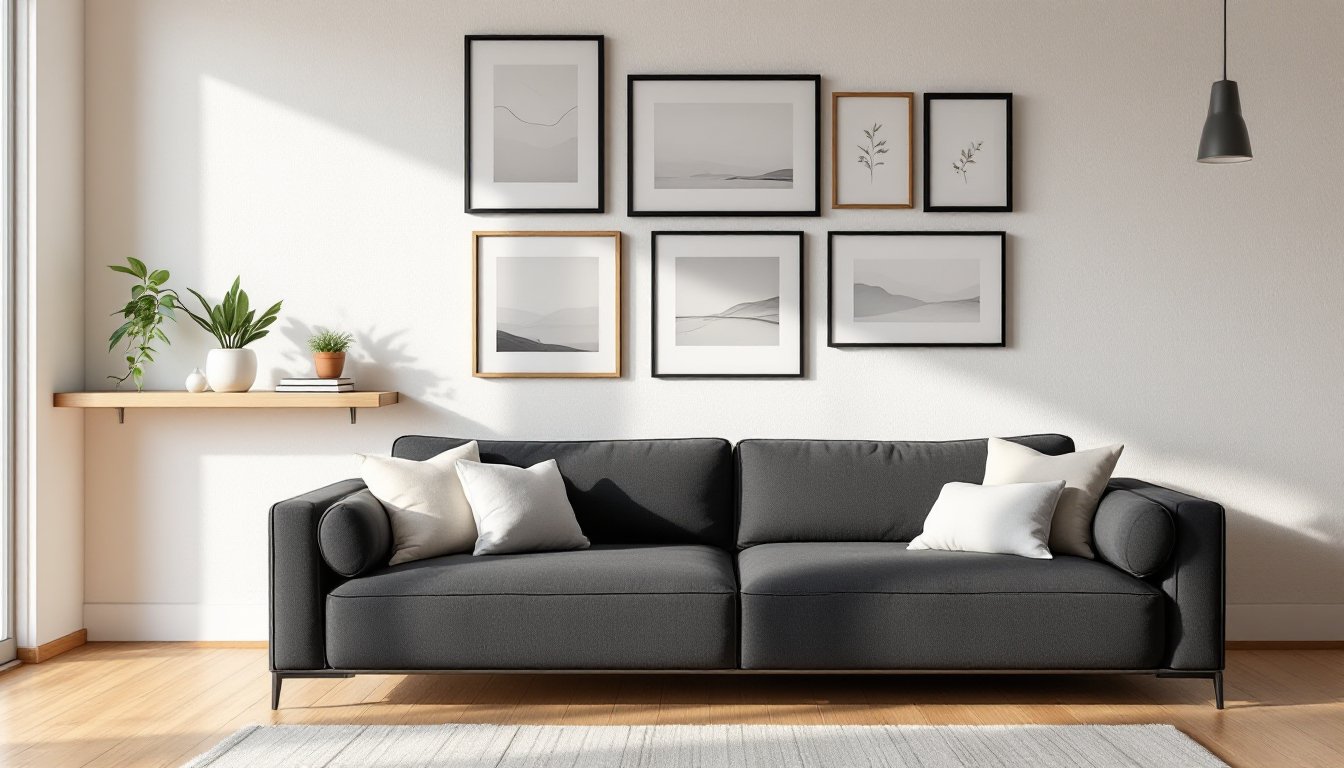
Start by mapping the layout on the floor or with painter’s tape on the wall. A common approach is the grid method: uniform frames in a repeating pattern, spaced 2 to 3 inches apart. This works well with matching mats and frames, creating a clean, gallery-like effect. For a less formal look, use a salon-style arrangement with varied frame sizes and orientations, but keep a consistent element, either mat color, frame finish, or a unifying subject matter.
Hanging height is critical. The center of the arrangement should sit at 57 to 60 inches from the floor (standard eye level), though this shifts slightly when the sofa back is tall. Measure from the floor, not the top of the couch.
Use a level and a tape measure, eyeballing leads to crooked rows. For drywall, use picture hangers rated for the combined frame weight. For plaster or brick, pre-drill and use anchors. If renting, adhesive strips rated for the frame weight (check the package) work for lighter pieces under 5 pounds per hook.
Frame materials matter. Wood frames add warmth: metal reads modern. If mixing, choose one dominant finish and limit accent finishes to one or two. Black frames on white mats are failsafe, but don’t sleep on natural oak or walnut for a softer, lived-in look that suits modern home decor trends.
Oversized Art and Statement Pieces
One large piece simplifies decision-making and makes a strong impact without fussing over layouts. It’s also easier to hang than a multi-frame gallery.
For a 90-inch sofa, aim for artwork at least 60 inches wide. Anything smaller floats awkwardly. Vertically, a 36 to 48-inch height keeps proportion in check without overpowering the wall. Lean toward horizontal or square canvases: tall vertical pieces can make low-slung modern sofas look off-balance.
Canvas prints are lightweight and affordable, with giclée prints on stretched canvas offering better color accuracy than poster prints. Expect to pay $100 to $300 for quality prints in the 40 x 60-inch range, depending on the source and whether it’s a limited run.
Framed prints under glass weigh more. A 40 x 60-inch framed print with mat and glass can hit 25 to 35 pounds, requiring two heavy-duty picture hangers or a French cleat system mounted into wall studs. Use a stud finder to locate framing: toggle bolts work for drywall if studs aren’t conveniently placed, but they’re not as secure for pieces over 50 pounds.
For renters or commitment-phobes, try removable adhesive poster strips for unframed canvas (check weight limits) or lean oversized art on a console table or narrow shelf placed behind the sofa. This avoids wall damage and makes swapping art easy.
Abstract, landscape, or black-and-white photography all work, choose based on the room’s existing palette. If the sofa and walls are neutral, bold color in the art adds energy. If the room’s already layered with pattern, stick to simpler compositions.
Mirrors and Reflective Decor
Mirrors behind a sofa bounce light and make smaller rooms feel larger, but placement and proportion are everything.
A single oversized mirror, think 36 x 48 inches or larger, adds drama and works especially well in rooms with windows on adjacent walls. The reflection multiplies natural light and creates depth. Avoid placing mirrors directly opposite windows if the reflected glare causes eye strain: angle them slightly or position them to reflect an interesting architectural feature or decor vignette instead.
Leaning mirrors are a low-commitment option. Rest a large floor mirror against the wall behind a low-profile sofa or on a narrow console. Secure the top with museum putty or L-brackets screwed into studs to prevent tipping, important in homes with kids or pets.
For a more composed look, arrange multiple smaller mirrors in a geometric grid. Keep spacing tight, 1 to 2 inches between frames, so it reads as one cohesive installation rather than scattered pieces. Round mirrors soften angular furniture: rectangular or square mirrors echo clean-lined modern sofas.
Mirror weight adds up fast. A 30 x 40-inch mirror with frame can weigh 20 to 40 pounds depending on glass thickness and frame material. Use heavy-duty D-ring hangers and picture wire, and mount into studs when possible. For drywall, choose toggle anchors rated well above the mirror’s weight.
Skip mirrors if the sofa faces a cluttered wall, open kitchen, or busy hallway, you’ll just be reflecting visual noise.
Floating Shelves and Functional Display Ideas
Floating shelves turn wall space into working storage and let you rotate decor seasonally without rehashing the entire room.
Shelf depth should match function. For books and frames, 8 to 10 inches deep provides enough support without jutting too far into the room. For lightweight decor, small plants, candles, or ceramics, 6 inches works. Shelves deeper than 12 inches read as ledges and can make a room feel crowded, especially if the sofa sits close to the wall.
Install shelves at varying heights for visual interest, spacing them 10 to 15 inches apart vertically. Stagger lengths if using multiple shelves, one 48-inch shelf over two 24-inch shelves creates rhythm without symmetry.
Mount shelves into wall studs whenever possible, especially for books or heavier objects. A typical hardcover book weighs about 1.5 pounds: a 48-inch shelf loaded with books can easily hit 30 to 50 pounds. Use a level during installation, crooked shelves are immediately obvious and ruin the look.
For drywall without accessible studs, use heavy-duty toggle bolts rated for the expected load. Avoid plastic anchors for anything over 10 pounds per shelf.
Style shelves in odd-numbered groupings, three or five objects per shelf, and vary height. Lean a small frame, add a potted succulent, stack two or three design books. Avoid overcrowding: negative space makes curated objects stand out. Incorporating elements featured in recent room makeovers can guide arrangement choices without copying them outright.
Textural Elements: Woven Art, Tapestries, and Wall Hangings
Textile wall decor adds warmth and softens hard surfaces, especially valuable in rooms with lots of wood, metal, or glass.
Macramé wall hangings bring bohemian texture without permanent installation. Hang from a wood dowel or driftwood rod using a single nail or adhesive hook. Sizes vary widely: for behind a sofa, aim for 36 to 48 inches wide to maintain visual weight. Smaller pieces get lost.
Woven wall art, jute, cotton, or wool fiber pieces on wooden frames, offers a more structured alternative to freeform macramé. These work well in modern or Scandinavian-leaning spaces where loose, drapey textiles feel too casual.
Tapestries are an affordable way to cover large areas. A 60 x 80-inch tapestry runs $30 to $100 depending on material and print complexity. Hang using a curtain rod mounted just above the sofa back, or tack corners with small nails and cover the heads with decorative upholstery tacks for a cleaner look.
Textile wall decor is lightweight, most pieces weigh under 5 pounds, so standard picture hooks or even 3M Command strips (check the rated weight) handle installation. This makes them ideal for renters.
Consider washability. Cotton and synthetic blends can usually be spot-cleaned or gently hand-washed: wool and jute are harder to maintain and may attract dust in high-traffic homes. Shake or vacuum textile pieces every few months to prevent buildup.
Texture works best when it contrasts with the room’s dominant materials. Pair woven pieces with leather or linen sofas: skip them if the couch is already nubby or heavily patterned. For more ideas on incorporating DIY textile projects, exploring budget home renovation stories can offer practical starting points.
Conclusion
The wall behind a couch doesn’t need to be complicated, but it does need intention. Whether it’s a single oversized canvas, a grid of frames, or a combination of shelves and textiles, the key is matching scale to the sofa and the room. Measure twice, use a level, and mount into studs when weight allows. Start with one approach, live with it, and adjust, decor isn’t structural work, and there’s no penalty for changing course.