Wall-mounted lighting can transform a bedroom from basic to functional and stylish without eating up floor space or nightstand real estate. Whether you’re looking to free up surface area, add task lighting for reading, or create ambient glow for late evenings, wall lights offer flexibility that table lamps can’t match. They’re hardwired for a clean look, come in styles ranging from minimalist sconces to swing-arm reading fixtures, and can be positioned exactly where you need them. This guide covers practical options for different bedroom layouts, installation basics, and placement tips to help you choose and install the right wall lights for your space.
Table of Contents
ToggleKey Takeaways
- Wall lights eliminate nightstand clutter while providing flexible, space-saving bedroom wall lights ideas that work for couples with different sleep schedules.
- Mounting bedside sconces 60–66 inches from the floor and 16–24 inches above the mattress for reading ensures optimal light placement without glare or obstruction.
- Swing-arm and gooseneck reading lights offer adjustable task lighting that lets you direct illumination exactly where needed, making them ideal for book lovers.
- Hardwired wall sconces require electrical work and permits but deliver a cleaner aesthetic, while plug-in options provide renter-friendly flexibility without professional installation.
- Layering wall lights with dimmers, overhead fixtures, and accent lighting creates depth and mood control, transforming bedrooms from functional to intentional and cozy.
- Pair wall sconces with proper beam angles and shades—opaque for focused light, clear for diffused ambient glow—to avoid hot spots and ensure balanced illumination.
Why Wall Lights Are Perfect for Bedrooms
Wall lights solve real problems. They clear off nightstands cluttered with lamps and charging cables, provide direct light exactly where it’s needed, and can be controlled independently from overhead fixtures. This makes them ideal for couples with different sleep schedules, one person can read while the other sleeps undisturbed.
Hardwired sconces eliminate the cord management headaches that come with plug-in lamps. Once installed, they’re permanent, which also means no wobbly bases or knocked-over fixtures. For renters or those who want flexibility, plug-in wall sconces with visible cords are an option, though they sacrifice the clean aesthetic.
Wall lights also work well in smaller bedrooms where floor space is tight. Mounting fixtures 18-24 inches above nightstand height keeps the walking path clear and provides downward or adjustable light for reading or tasks. In rooms without nightstands, wall sconces flanking the bed become the primary bedside lighting.
Finally, wall-mounted fixtures add a layer of ambient or accent lighting that overhead cans or ceiling fixtures can’t deliver. They create pools of light that make a room feel cozier and more intentional, especially when paired with dimmer switches.
Modern Wall Sconce Ideas for Contemporary Bedrooms
Minimalist cylinder sconces are workhorses in modern bedrooms. These simple up-and-down fixtures cast light onto the wall and ceiling, creating soft ambient glow without glare. Look for models with integrated LED modules, they’re energy-efficient and don’t require bulb replacements. Matte black, brushed nickel, or white finishes blend with most contemporary palettes.
Picture lights aren’t just for artwork. Slim brass or matte black picture lights mounted above the headboard provide focused downlight for reading and double as a design accent. They work especially well in bedrooms with upholstered or wooden headboards that benefit from highlighting.
Swing-arm sconces in industrial or Scandinavian styles offer adjustable task lighting. Articulated arms let you direct light exactly where you need it, then tuck the fixture back against the wall when not in use. Powder-coated steel or natural wood finishes keep the look clean and functional. These are especially useful for smaller rooms where flexibility matters.
Globe sconces with opal glass shades diffuse light evenly and add a soft, sculptural element. They’re a good middle ground between stark minimalism and ornate traditional fixtures. Paired in symmetrical arrangements flanking a bed, they create a balanced, hotel-like feel.
For a bolder statement, geometric or angular sconces in brass, copper, or matte black bring architectural interest. These work best on neutral walls where the fixture itself becomes a focal point. Keep the rest of the room’s decor restrained to avoid visual clutter.
Reading Lights: Wall-Mounted Solutions for Book Lovers
A good bedside reading light needs focused, adjustable illumination that doesn’t spill onto a partner’s side of the bed. Swing-arm reading lights are the gold standard. Models with adjustable arms and rotating heads let you position light directly over a book or e-reader. Look for fixtures with built-in LED strips or sockets that accept Edison-base bulbs in the 3000K-4000K color temperature range, warm enough for comfort, bright enough for clarity.
Gooseneck wall lamps offer similar flexibility in a sleeker form. These have bendable necks that hold position once adjusted. They’re ideal for tight spaces and provide a modern, streamlined look. Make sure the gooseneck is long enough (at least 12-14 inches) to direct light over the edge of a pillow without shining in your eyes.
Articulated arm sconces with shades direct light downward and reduce glare. Fabric or metal shades help control light spill. If you’re a serious nighttime reader, choose a fixture with a dimmer-compatible LED or a three-way bulb socket so you can dial in the right brightness.
Install reading lights 16-24 inches above mattress height, positioned so the light source is roughly at shoulder level when you’re sitting up in bed. This minimizes shadows on the page and keeps light out of your direct line of sight. If the fixture has an integrated switch, make sure it’s reachable from a sitting position, fumbling for a switch defeats the purpose.
Ambient and Accent Wall Lighting Ideas
Ambient wall lighting isn’t about brightness, it’s about mood and depth. Uplights and downlights create washes of light that highlight textures like shiplap, brick, or painted accent walls. Install these on either side of a bed or along a feature wall to add dimension without overhead glare.
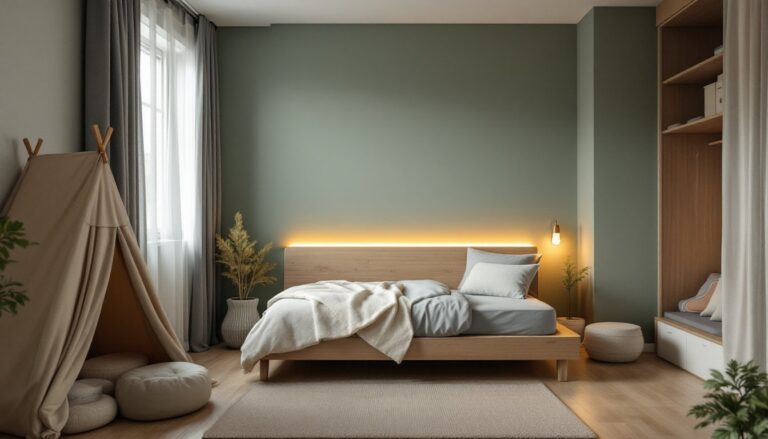
Linear LED strip fixtures mounted vertically or horizontally behind headboards or floating shelves create indirect glow. These are especially effective in bedrooms with modern decor schemes where clean lines and hidden light sources are priorities. Use warm white LEDs (2700K-3000K) for a relaxing atmosphere, and pair them with a dimmer.
Candle-style sconces with frosted or seeded glass shades soften the light and add a classic, slightly romantic touch. These work in transitional or farmhouse-style bedrooms and pair well with wood tones and neutral linens. They’re less functional for reading but excellent for creating a calming pre-sleep environment.
Backlit or halo sconces mount flush to the wall and cast light in a ring or crescent shape. These provide just enough illumination for navigating the room at night without turning on harsh overhead lights. Install them near doorways or closets for functional accent lighting.
For layered lighting, combine wall sconces with overhead fixtures and table lamps. Use wall lights on dimmers to adjust the room’s brightness throughout the day, brighter in the morning, softer in the evening. This layered approach gives you control and keeps the space from feeling one-dimensional.
Installing Bedroom Wall Lights: What You Need to Know
Hardwiring wall sconces is an electrical job that requires cutting into drywall and connecting to your home’s wiring. In most jurisdictions, this work requires a permit and must follow National Electrical Code (NEC) standards. If you’re not comfortable working with live wires, hire a licensed electrician. DIY installation is possible if you have basic electrical knowledge and local codes allow it.
Step 1: Turn off power at the breaker. Use a non-contact voltage tester to confirm the circuit is dead before touching any wires. This is non-negotiable.
Step 2: Determine wire routing. If you’re installing sconces near existing switches or outlets, you may be able to tap into that circuit. For new runs, you’ll need to fish 14/2 or 12/2 Romex (depending on circuit amperage) through the wall cavity. If studs or fire blocking are in the way, you may need to cut access holes and patch drywall later.
Step 3: Install electrical boxes. Use old-work (retrofit) electrical boxes rated for wall sconces. These clamp into drywall and don’t require access to studs. Make sure the box is rated for the fixture’s weight, heavier sconces may need boxes screwed into a stud or blocking.
Step 4: Wire the fixture. Connect black (hot) to black, white (neutral) to white, and bare copper or green (ground) to the box’s ground screw. Use twist-on wire connectors and wrap connections with electrical tape for added security. Tuck wires neatly into the box before mounting the sconce.
Step 5: Attach the fixture and test. Most sconces mount with a crossbar and screws. Once secured, restore power and test the switch. If you’re adding a dimmer, make sure it’s compatible with LED bulbs if that’s what the fixture uses.
PPE: Wear safety glasses and work gloves. If you’re cutting drywall, use a dust mask.
If running new wire isn’t feasible, consider plug-in wall sconces with a cord that runs to an existing outlet. These sacrifice the clean look but require no electrical work and are renter-friendly.
Choosing the Right Wall Light Placement and Height
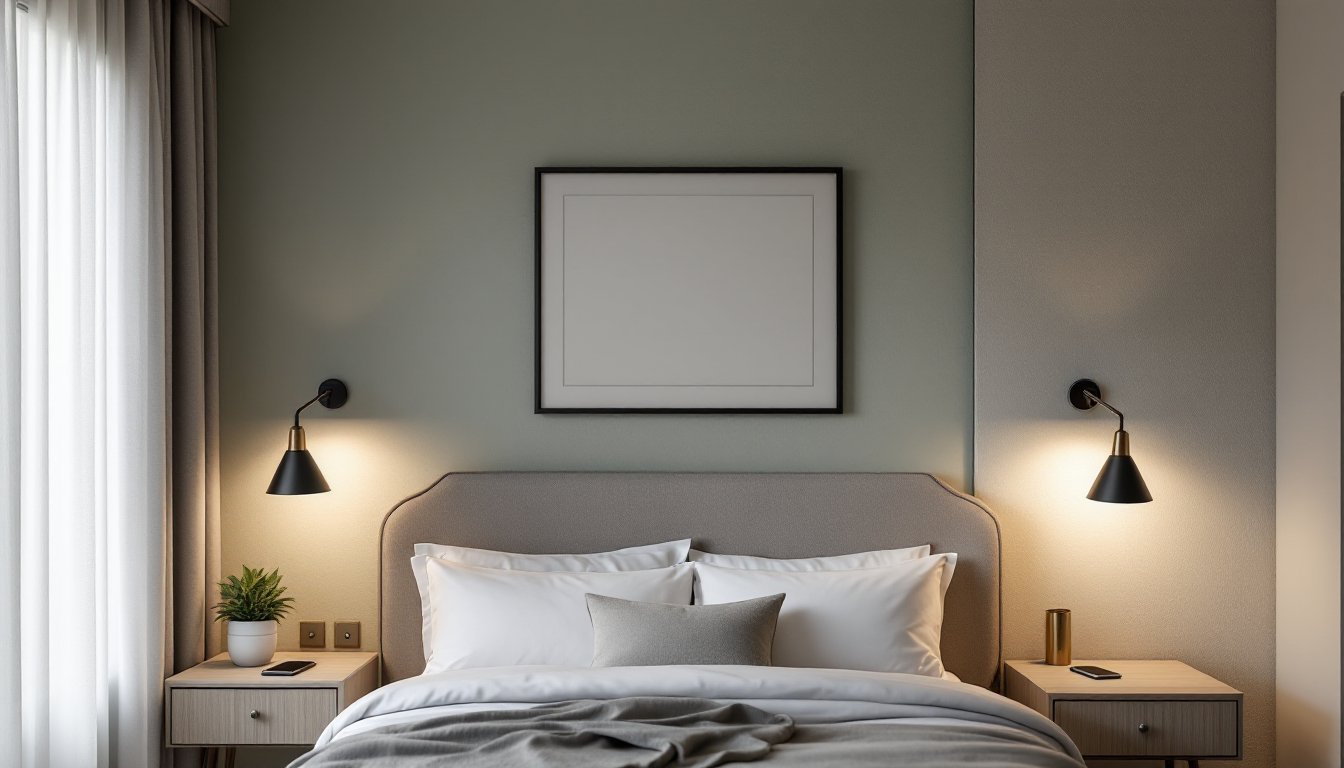
Placement makes or breaks wall lighting. Mount bedside sconces too high and the light’s wasted: too low and you’ll bonk your head. For general bedside lighting, install sconces 60-66 inches from the floor (measured to the center of the fixture). This puts the light source roughly at eye level when seated, reducing glare.
If you’re using sconces for reading, mount them 16-24 inches above the top of the mattress. Adjustable or swing-arm fixtures give more flexibility here, you can start higher and angle the light downward.
Horizontal spacing depends on bed width. For a queen or king bed, place sconces 18-24 inches from the outer edge of the nightstand (or where the nightstand would be). This keeps them within arm’s reach but prevents interference with pillows or headboards. If there’s no nightstand, center the sconce over where the pillow meets the headboard.
In rooms with accent walls or architectural features, use wall lights to highlight texture or artwork. Mount uplights 12-18 inches from the feature to graze the surface and create depth. For symmetry, use pairs of sconces, one on each side of the bed, fireplace, or feature wall.
Always consider the fixture’s beam angle and shade. Opaque or downward-facing shades concentrate light: clear or open fixtures spread it. If you’re layering multiple light sources, choose shades that direct light where it’s needed and avoid overlap that creates hot spots.
Finally, think about switch placement. Wall sconces should have switches accessible from the bed, either on the fixture itself or on a bedside wall. Three-way switches (one at the door, one at the bed) are ideal for convenience.
Conclusion
Wall lights offer practical, space-saving lighting that fits nearly any bedroom style. From reading lamps that save nightstand space to ambient sconces that add warmth and depth, the right fixtures improve both function and atmosphere. Plan your placement, understand the electrical requirements, and choose fixtures that match how you actually use the room, not just how it looks in photos. Whether you’re hardwiring new sconces or swapping out plug-in options, good lighting makes a bedroom more livable.