Your home’s exterior is under constant assault from dirt, mildew, algae, and pollen. While owning a pressure washer might seem like a DIY victory, the reality is that most homeowners lack the experience to avoid streaking concrete, etching siding, or blasting water behind window seals. Professional pressure washing services handle these projects daily, delivering commercial-grade results without the learning curve or equipment investment. This guide walks homeowners through finding, vetting, and hiring the right local pressure washing company in 2026, whether they’re tackling a moldy deck, oxidized vinyl siding, or oil-stained driveways.
Table of Contents
ToggleKey Takeaways
- Professional pressure washing services use commercial-grade equipment (2,500–4,000 PSI) and surface-specific expertise to prevent costly damage like water intrusion, paint stripping, and concrete pitting that DIY attempts risk.
- Verify credentials by requesting proof of general liability insurance (minimum $1 million), workers’ compensation, and contractor licenses before hiring pressure washing services near you.
- Transparent pricing for pressure washing typically ranges from $0.08–$0.40 per square foot depending on surface type, with detailed estimates specifying square footage, cleaning method, detergents, and preparation included.
- Soft-washing (under 500 PSI with detergents) protects vinyl siding, stucco, and painted surfaces, while high-pressure washing suits concrete and pressure-treated wood, so ask contractors which method they’ll use for each surface.
- Professional pressure washing companies save homeowners 2–4 hours versus a full weekend of DIY work, plus they handle wastewater responsibly to comply with EPA guidelines and local environmental regulations.
- DIY pressure washing makes sense only for ground-level projects like patios; hire professionals for two-story work, roofs, and delicate surfaces to avoid $2,000–$5,000 repair bills and injury risks.
Why Hire Professional Pressure Washing Services?
Professional pressure washing companies bring expertise that goes beyond raw water pressure. They understand surface-specific PSI settings, nozzle angles, and detergent chemistry, knowledge that prevents damage to wood, vinyl, brick, and composite materials.
Equipment and safety are the first advantages. Commercial pressure washers typically operate between 2,500–4,000 PSI with 3–4 GPM (gallons per minute) flow rates, compared to consumer models at 1,500–2,000 PSI. This power cuts cleaning time dramatically while delivering deeper cleaning. Professionals also carry liability insurance, which matters when working on ladders, roofs, or near electrical meters.
Surface knowledge prevents costly mistakes. Soft-wash techniques, using low pressure (under 500 PSI) with specialized detergents, are essential for vinyl siding, stucco, and painted surfaces. High-pressure washing can force water behind siding, leading to mold inside walls, or strip paint from wood trim. A trained operator adjusts pressure, nozzle distance, and cleaning agents based on material type.
Time savings are substantial. What takes a homeowner an entire weekend, including equipment rental, setup, and cleanup, a two-person crew completes in 2–4 hours. Professionals also handle water runoff responsibly, often collecting and filtering wastewater to comply with local environmental regulations, particularly when cleaning driveways with oil stains or decks treated with certain sealers.
What to Look for in a Local Pressure Washing Company
Start with licensing and insurance verification. Request proof of general liability insurance (minimum $1 million coverage is standard) and workers’ compensation if they have employees. Some states require contractor licenses for pressure washing services, especially when working on commercial properties or handling chemical treatments.
Experience with specific surfaces matters. A company that excels at concrete driveways might not have soft-wash training for cedar shake siding. Ask how long they’ve been servicing residential properties and request photos of completed projects similar to yours. Look for evidence they understand material-specific challenges, like the difference between cleaning composite decking (low pressure, no bleach) versus pressure-treated lumber.
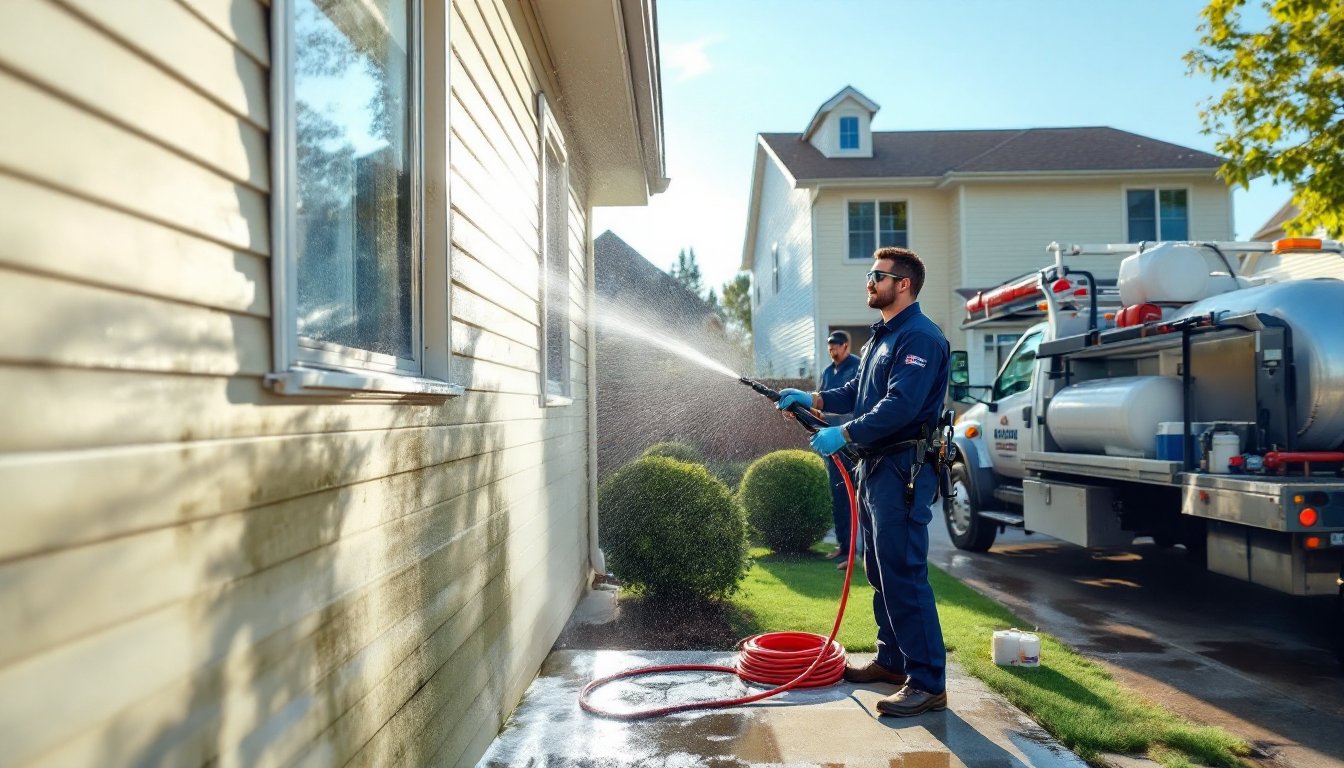
Equipment quality reveals professionalism. Companies using truck-mounted or trailer-mounted systems with hot water capabilities can tackle grease, gum, and heavy organic stains more effectively than cold-water units. Hot water systems typically add 30–40% to cleaning effectiveness for oil-based stains. Ask about their PSI range and whether they own both high-pressure and soft-wash equipment.
Environmental practices are increasingly important. Responsible companies capture wastewater when cleaning surfaces contaminated with paint, oil, or harsh chemicals. When researching local service providers, confirm they follow EPA guidelines for water discharge, particularly in areas with storm drain restrictions.
Reviews and references offer real-world feedback. Look beyond star ratings to read what customers say about punctuality, communication, and how the company handled problems. Red flags include vague responses about insurance, reluctance to provide written estimates, or pushy upselling.
How to Find Reliable Pressure Washing Services Near You
Online platforms have streamlined the search process. Sites focused on contractor matching and reviews allow homeowners to compare multiple licensed professionals, read verified customer feedback, and request quotes. Filter results by proximity, specialization (residential vs. commercial), and availability.
Local business directories and neighborhood apps (Nextdoor, local Facebook groups) often surface smaller operators who rely on word-of-mouth rather than paid advertising. These companies sometimes offer better pricing but may have limited insurance or lack commercial-grade equipment. Always verify credentials regardless of referral source.
Get multiple estimates, ideally three. Detailed quotes should specify:
- Square footage or linear footage being cleaned
- Surfaces included (siding, driveway, walkways, deck, fence)
- Cleaning method (high-pressure vs. soft-wash)
- Detergents or treatments applied (algaecide, mildew remover, brighteners)
- Preparation and cleanup (moving furniture, covering plants, post-rinse)
Beware of quotes based only on time (“$150/hour”) without defining scope. Flat-rate or per-square-foot pricing ($0.15–$0.40/sq ft for siding, $0.08–$0.25/sq ft for concrete) is more transparent.
Seasonal timing affects availability and pricing. Spring and early summer are peak seasons: booking in late fall or winter may yield 10–20% discounts in regions with year-round service. But, avoid scheduling immediately before hard freezes, as moisture in cracks can expand and cause damage.
Understanding Pressure Washing Costs and Pricing
National averages in 2026 for residential pressure washing range from $300–$700 for a typical single-family home exterior, but pricing varies widely by region, surface type, and project complexity.
Driveway and sidewalk cleaning typically costs $0.08–$0.25 per square foot, meaning a standard 400-square-foot driveway runs $30–$100. Oil stain removal or sealing after cleaning adds $50–$150. Heavy rust or tire mark removal may require additional treatments.
House siding pricing depends on material and height. Single-story vinyl siding averages $0.15–$0.30/sq ft, while two-story homes or textured surfaces (brick, stucco) range $0.25–$0.40/sq ft. Soft-washing services often cost slightly more due to specialized equipment and detergents.
Decks and fences cost $0.20–$0.50/sq ft for cleaning, with additional charges for brightening or sealing. A 300-square-foot deck typically runs $60–$150 for cleaning alone. Cedar and redwood require gentler techniques (and higher pricing) than pressure-treated pine.
Additional surfaces include:
- Roofs (soft-wash only): $0.20–$0.60/sq ft
- Gutters (exterior): $1–$2 per linear foot
- Pool decks and patios: $0.15–$0.30/sq ft
Factors that increase cost include mold or mildew remediation (adds 20–40%), second-story work (ladder or lift access), heavy staining, and tight access areas where equipment setup is difficult. When planning renovation budgets using resources like cost estimation tools, factor in seasonal maintenance like pressure washing to preserve exterior finishes.
Questions to Ask Before Hiring a Pressure Washing Service
Are you licensed and insured? Request certificate numbers and verify coverage directly with their insurance provider. Unlicensed operators may offer lower prices but leave homeowners liable for property damage or injuries.
What cleaning method will you use on my surfaces? The answer should be specific. Vinyl siding should be soft-washed (under 500 PSI with detergents), while concrete can handle 2,500–3,500 PSI. If they suggest high-pressure washing everything, they lack surface-specific training.
What detergents or chemicals will you apply? Responsible companies use biodegradable, EPA-approved cleaners. Sodium hypochlorite (bleach) solutions are effective for mold and algae but must be properly diluted and rinsed. Avoid companies that can’t explain their chemical processes.
How will you protect landscaping and surrounding areas? Plants should be pre-wetted and covered or rinsed immediately after chemical application. Delicate shrubs near the house need special attention. Ask about their prep and post-cleaning procedures.
What’s included in your estimate? Clarify whether pricing covers moving outdoor furniture, covering electrical outlets, post-cleaning inspection, and final walkthrough. Hidden fees for “additional staining” or “extra detergent” indicate poor estimating practices.
Do you guarantee your work? Professional companies stand behind results, typically offering to re-clean areas if customers aren’t satisfied within a reasonable timeframe (usually 7–14 days). Get this in writing.
How do you handle water runoff? In many municipalities, wastewater from pressure washing, especially with chemicals or when cleaning oily surfaces, cannot legally enter storm drains. Ask about containment and disposal methods.
DIY vs. Professional Pressure Washing: Making the Right Choice
DIY makes sense for simple, ground-level projects like concrete patios, plain wooden decks (already weathered and not near windows), or washing patio furniture. Consumer-grade electric pressure washers (1,500–2,000 PSI) rent for $40–$80/day and handle basic dirt and mildew without major damage risk.
Safety gear for DIY work includes safety goggles (not just sunglasses, pressure washers can ricochet debris), closed-toe boots with good traction, hearing protection (gas-powered units run 85–90 dB), and gloves when handling detergents. Never point the wand at people, pets, or windows.
Technique errors cause most DIY damage:
- Too close: Holding the nozzle under 12 inches gouges wood, strips paint, and pits concrete
- Wrong angle: Directing spray upward under siding forces water into wall cavities
- Inconsistent passes: Create streaking and uneven cleaning, especially visible on driveways
- Ignoring surface prep: Failing to sweep debris leads to grinding dirt into surfaces
Hire professionals for two-story work, roofs, delicate surfaces (stucco, painted wood, composite decking), or any project near electrical panels and meters. The cost difference between renting equipment ($80) plus your weekend versus hiring a crew ($300–$400 for whole-house exterior) often favors professionals when factoring in results quality and injury risk.
Liability concerns are real. Damaging your own siding might mean a $2,000–$5,000 repair bill that insurance won’t cover (DIY damage typically isn’t included in homeowner policies). Professional services carry insurance that protects both parties.
Conclusion
Finding reliable local pressure washing services comes down to verifying credentials, understanding pricing structures, and asking the right questions about equipment and methods. Whether tackling algae-stained siding or oil-marked driveways, professional cleaners deliver results that extend the life of exterior surfaces while avoiding the damage risks that plague DIY attempts. Prioritize companies with proven surface-specific expertise, transparent pricing, and proper insurance, your home’s curb appeal and structural integrity depend on it.