A bare coffee table is like an empty canvas, full of potential but waiting for direction. Whether it’s stacked high with last week’s mail or completely neglected, this piece of furniture sits at the center of most living rooms and deserves better. Coffee table styling isn’t about making it look like a showroom (nobody lives like that), but about creating a functional, visually balanced space that reflects how the room actually gets used. Done right, it anchors the entire seating area and makes the space feel intentional instead of haphazard.
Table of Contents
ToggleKey Takeaways
- Coffee table decorating ideas work best when they balance visual appeal with practical function, leaving at least one-third of the surface clear for actual daily use.
- The Rule of Three—using odd-numbered groupings with varying heights and textures—creates intentional, visually interesting arrangements without feeling overly formal or staged.
- Effective coffee table styling must match your room’s aesthetic: minimalist spaces need restraint with one or two objects, while rustic farmhouse welcomes layers of natural textures and coastal or bohemian styles embrace eclectic, collected-over-time feels.
- Decorative trays, books, and coasters are functional decor essentials that corral items, add visual height, and define boundaries while keeping the table usable for real life.
- Rotating seasonal decor keeps your coffee table feeling fresh and intentional without requiring new furniture or a complete redesign.
Why Coffee Table Styling Matters in Your Living Room
The coffee table acts as the visual anchor point for a living room’s seating arrangement. It’s typically the first horizontal surface guests see when they walk into the space, and it sets the tone for the entire room’s aesthetic.
Beyond appearance, this surface handles real daily use, remotes, drinks, books, laptops, and feet (let’s be honest). A well-styled table balances decoration with function, leaving room for actual life to happen. If every inch is covered with decorative objects, it becomes impractical. If it’s completely bare, it feels cold and unfinished.
Proper styling also creates visual weight and proportion. A large sectional needs a substantial table with enough visual presence to hold its own. A small loveseat setup works better with lighter, airier arrangements. Designers in publications like Domino often emphasize that scale matters more than most homeowners realize, an understyled table disappears, while an overstyled one dominates.
Think of coffee table decor as the room’s punctuation mark. It doesn’t need to shout, but it should complete the sentence.
The Rule of Three: Creating Balanced Coffee Table Displays
Designers rely on the Rule of Three because odd-numbered groupings create visual interest without symmetry’s stiffness. Three objects, or three distinct groupings, feel intentional but not overly formal.
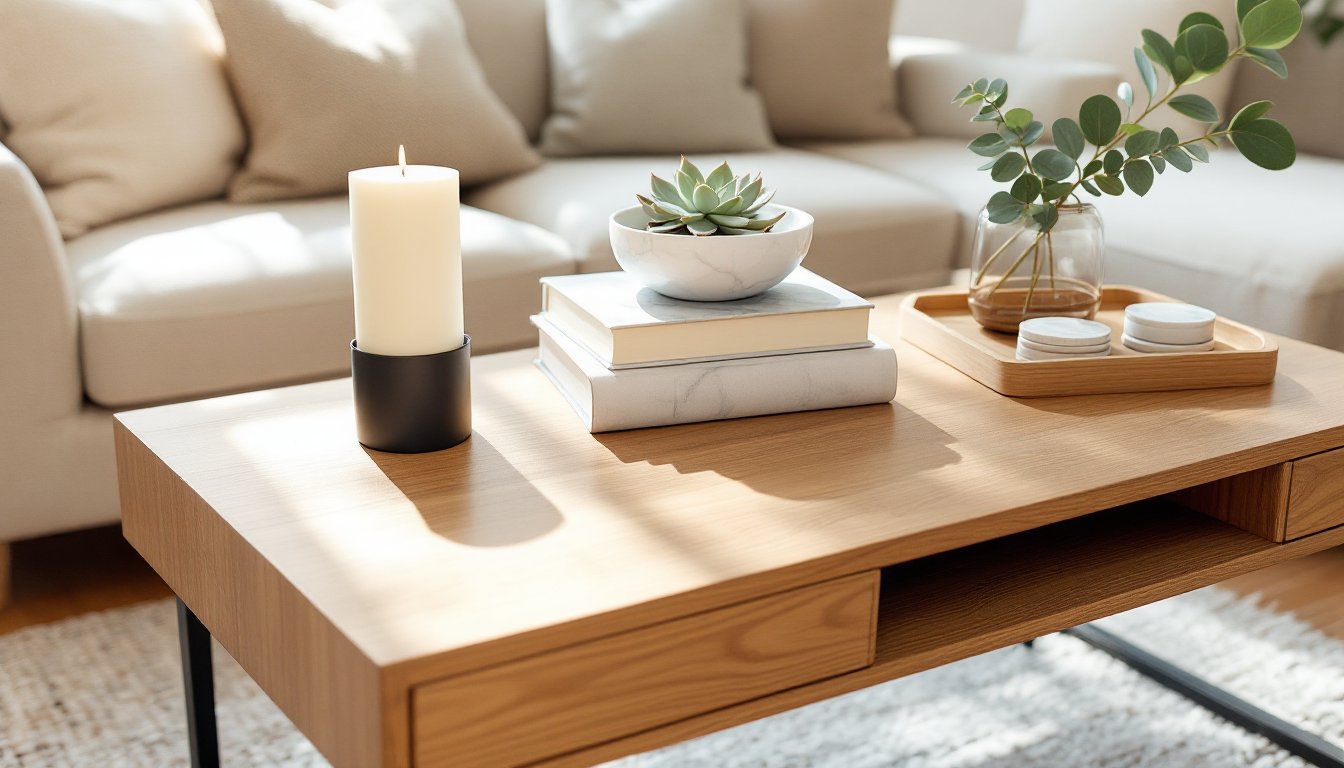
Start with varying heights. A tall candlestick (10-14 inches), a medium-height stack of books (4-6 inches), and a low decorative bowl or tray creates natural visual flow. The eye moves between levels instead of scanning a flat plane.
Texture variation matters just as much as height. Combine materials like wood, ceramic, metal, and organic elements (greenery or dried botanicals). A wooden tray, a glazed ceramic vase, and a linen-bound book offer three distinct tactile experiences that photograph well and feel layered in person.
The rule isn’t rigid, five or seven items can work if they’re grouped into three clusters. For example: a stack of three books counts as one element, a pair of small succulents in matching pots reads as one grouping, and a single large decorative object stands alone. This clustering technique appears frequently in modern design showcases, where layers add depth without clutter.
For rectangular tables, divide the surface into thirds lengthwise. Place one grouping in the center third, leaving the outer thirds open for trays, coasters, or functional items. For round or square tables, center a single anchor piece (like a large tray or bowl) and build around it.
Balance doesn’t mean symmetry. Offset arrangements feel more organic and less staged, which suits how most people actually live.
Coffee Table Decor Ideas by Style
Modern Minimalist Coffee Table Styling
Minimalist styling prioritizes negative space and clean lines. The table surface should feel open, with one or two carefully chosen objects rather than multiple clusters.
A single sculptural object, like a matte black ceramic vase or a geometric metal tray, creates a focal point without visual noise. Pair it with one functional item: a small dish for remotes or a single hardcover book with neutral cover design.
Material choices lean toward matte finishes, natural stone, concrete, and unglazed ceramics. Greenery works best as a single stem in a simple vessel rather than a full arrangement. Think one monstera leaf in a tall cylinder vase, not a bouquet.
Color palettes stick to neutrals, white, black, gray, beige, and natural wood tones. If adding a pop of color, limit it to one object in a muted tone like sage green or terracotta.
The key is restraint. If it feels like something’s missing, that’s usually the right amount for minimalist design. Similar principles apply when styling other spaces, like approaches to kitchen countertop styling.
Rustic Farmhouse Coffee Table Decor
Farmhouse style embraces worn wood, vintage finds, and a lived-in look that suggests comfort over perfection. Start with a wooden tray as the foundation, preferably something with visible grain or a distressed finish.
Layer in natural textures: a small galvanized metal bucket holding a simple greenery bundle (eucalyptus, cotton stems, or dried wheat), a vintage hardcover book or two, and a chunky pillar candle in cream or ivory. Candlesticks work too, especially turned wood or wrought iron styles.
Farmhouse decor tolerates, even welcomes, a little asymmetry and imperfection. A chipped ceramic bowl, mismatched candleholders, or a weathered wooden box add character. Avoid anything too polished or shiny: opt for matte, aged, or hand-finished pieces.
Seasonal swaps keep the look fresh without a full redesign. In fall, add mini pumpkins or a wheat bundle. In winter, swap in evergreen clippings or pinecones. Spring calls for fresh wildflowers in a mason jar.
This style has overlap with broader <a href="https://friskylane.com/category/decorating-ideas/”>home decorating approaches that value authenticity and personal touches over catalog perfection.
Coastal and Bohemian Coffee Table Ideas
Coastal styling brings in ocean-inspired elements without resorting to literal seashell tchotchkes. Think weathered driftwood, rope-wrapped accessories, sea glass in a clear jar, or coral specimens (real or faux).
A woven tray, rattan, seagrass, or jute, serves as the base layer. Add a ceramic bowl in white or seafoam green, a small potted succulent, and a coffee table book with coastal photography or travel themes. Texture is the priority: smooth glass, rough natural fiber, and organic shapes.
Bohemian style layers more freely. Start with a patterned runner or small kilim rug directly on the table surface (yes, really, it adds warmth and pattern). Stack vintage books with colorful spines, add a brass or copper tray, and include global-inspired objects like a Moroccan tea glass, a small woven basket, or a beaded garland.
Plants are essential for boho styling, the more, the better. Mix heights and pot styles: a trailing pothos in a macramé hanger, a small snake plant in a terracotta pot, and a succulent in a painted ceramic planter. Don’t worry about matching: eclectic variety is the goal.
Both styles benefit from the informal, collected-over-time feel that design enthusiasts recommend for creating spaces that feel personal rather than staged.
Functional Decorating: Combining Beauty with Practicality
Decorative trays are the secret weapon for functional coffee table styling. A 12×18-inch wooden or metal tray corrals smaller items, remotes, coasters, a candle, into one neat zone, making it easy to clear space when needed. It also defines boundaries, preventing decor creep across the entire surface.
Coasters deserve intentional selection. Skip the sad cork set and choose materials that complement the room: marble hexagons for modern spaces, wooden rounds for farmhouse, or hand-painted ceramic tiles for eclectic styles. Stack them in a small holder or fan them out on a tray.
Books serve double duty. A stack of two to four hardcover books (between 9×12 and 11×14 inches works best) adds height and provides a stable platform for smaller objects like a candle or small vase. Choose books with attractive spines or covers that tie into the room’s color scheme. Art, architecture, travel, and photography books photograph well and invite browsing.
Storage options hide clutter without sacrificing style. A lidded wooden box or woven basket stashes remotes, charging cables, and miscellaneous items while looking intentional. Ottomans with lift-top storage double as both seating and hidden storage, though they’re technically a coffee table alternative.
Leave at least one-third of the table surface completely clear. This open space provides landing room for drinks, laptops, or snack plates without disrupting the arrangement. If the table is constantly cleared and reset, the styling isn’t working, it’s just in the way.
Lighting adds ambiance without taking up much real estate. A battery-operated LED candle (4-6 inches tall) provides the glow without the fire hazard, especially useful in homes with kids or pets. Real candles work too, just use unscented versions to avoid overwhelming smaller rooms.
Rotate decor seasonally to keep the space feeling current without buying new furniture. Swap out books, change greenery (fresh to faux and back), or switch trays. Small updates prevent the table from becoming invisible background furniture. This rotation mindset works well across different rooms, including often-overlooked spaces like stair landings that benefit from seasonal refreshes.
The best coffee table styling accommodates real life. If the setup doesn’t survive a Tuesday night dinner in front of the TV, it’s decoration for decoration’s sake, not practical design. Balance means leaving room for living while still making the space look intentional when guests arrive.