Most bathroom countertops are working overtime, cluttered with half-empty bottles, mystery tubes, and that one hair tie you can’t throw away. But a well-styled countertop can turn a purely functional space into something you actually want to spend time in. The trick is balancing daily use with intentional design. These decorating ideas focus on practical styling techniques that work for real bathrooms, whether you’re dealing with a cramped vanity or a sprawling double-sink setup.
Table of Contents
ToggleKey Takeaways
- Use a decorative tray sized to your vanity (12 inches max for a 24-inch vanity, 18–20 inches for double sinks) to organize daily essentials while maintaining clear workspace near the sink.
- Incorporate bathroom-friendly plants like pothos and snake plants in small pots, or use preserved eucalyptus and faux stems to create a spa-like atmosphere without requiring high light or frequent watering.
- Layer different textures—matte with glossy, rough with smooth, natural fibers with metal—to add visual interest and depth to bathroom countertop decorating ideas without increasing clutter.
- Choose functional storage that doubles as décor, such as glass apothecary jars, open organizers, or floating shelves, to keep items accessible while maintaining an intentional look.
- Select statement pieces and artwork that can withstand moisture, like sealed ceramics, glazed pottery, and framed prints behind glass, to anchor your design without warping from bathroom humidity.
- Maintain a balance between aesthetics and practicality by leaving at least 12 inches of clear counter space on both sides of the sink and wiping down décor weekly to prevent soap scum and buildup.
Create a Stylish Tray Display for Everyday Essentials
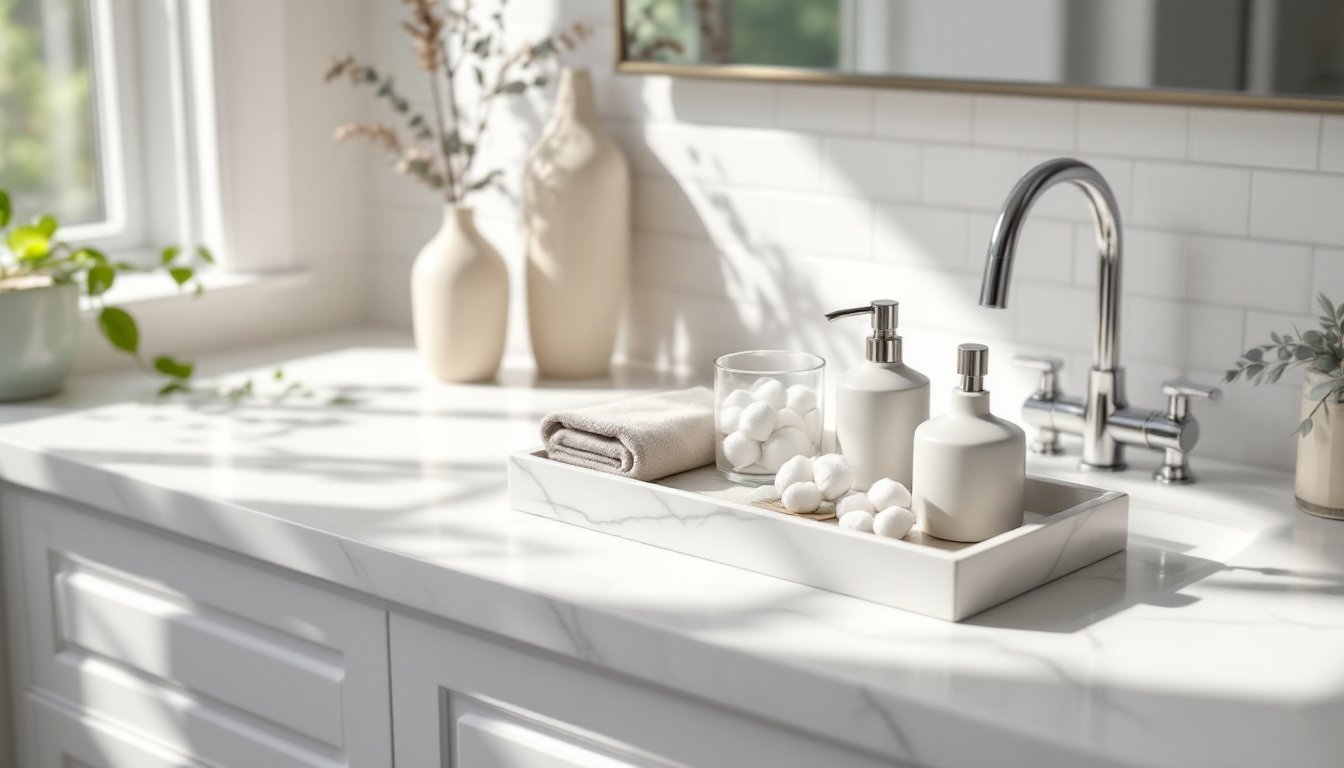
A decorative tray is the simplest way to corral the items used every day while adding structure to the countertop. Choose a material that matches the bathroom’s vibe, marble or stone for modern spaces, wood or rattan for warmer looks, metal for industrial or glam styles.
Size matters here. For a 24-inch vanity, stick to a tray no wider than 12 inches. On a 60-inch double vanity, you can go up to 18–20 inches or use two smaller trays to define separate zones. The tray should sit about 2–3 inches from the backsplash and leave clearance for faucet operation.
Group items by function: soap dispenser, lotion, hand towel, maybe a small candle. Keep it to 3–5 items max. Too many pieces create the same visual clutter you’re trying to avoid. Swap out seasonal elements, a small vase with fresh eucalyptus in summer, a ceramic pumpkin in fall, to keep the look fresh without a full redesign.
Avoid placing trays directly in the splash zone near the sink unless they’re sealed stone or waterproof resin. Water damage and soap scum will wreck wood and fabric quickly. Wipe trays weekly to prevent buildup.
Add Natural Elements for a Spa-Like Atmosphere
Live plants and natural materials soften hard bathroom surfaces, tile, porcelain, glass, and improve the feel of the space without major renovation. Not every plant thrives in a bathroom, though. High-humidity, low-light tolerant species like pothos, snake plants, and ZZ plants handle bathroom conditions better than succulents, which need more light and less moisture.
For countertops, choose compact varieties in 4-inch or 6-inch pots. Anything larger crowds the workspace. Elevate plants on small risers or stack two different heights to add dimension. Ceramic or glazed pots work best: unglazed terra cotta can leave water rings on countertops.
If live plants aren’t realistic, low light, no windows, chronic over-watering, preserved eucalyptus, dried pampas grass, or high-quality faux stems in a simple vase work just as well visually. Change the water in real arrangements every 3–4 days to prevent bacterial growth and odor.
Natural materials extend beyond plants. A teak or bamboo soap dish, river stone tray, or linen hand towel add organic texture. Many designers on Houzz layer these elements to build a cohesive, spa-inspired aesthetic. Just ensure wood items are treated or naturally water-resistant to handle the moisture.
Incorporate Functional Storage That Doubles as Décor
The best bathroom countertop décor does double duty, it looks good and solves a storage problem. Open storage works when the contents are intentionally curated. A two-tier wire or acrylic organizer keeps everyday items accessible but visually contained. Glass apothecary jars store cotton balls, swabs, and bath salts while keeping moisture out.
For smaller countertops with limited real estate, wall-mounted solutions free up surface space. A floating shelf installed 12–16 inches above the counter holds décor and less-used items. Pair it with under-shelf hooks for hand towels. Make sure to anchor shelves into wall studs or use appropriate drywall anchors rated for at least 20 lbs to prevent sagging or failure, especially in humid environments where drywall can weaken.
Vertical storage, like a slim three-tier rolling cart tucked beside the vanity, provides overflow storage without cluttering the counter. Look for carts with a footprint under 12 inches wide that can slide into tight gaps. Metal carts hold up better than plastic in humid bathrooms and won’t warp over time.
Similar concepts apply across spaces: the principles of functional kitchen storage translate well to bathroom vanities. Avoid open storage for items you don’t want on display, medications, personal care tools, and grooming gadgets are better hidden in drawers or cabinets.
Use Layered Textures to Add Visual Interest
Flat, one-note surfaces look boring. Layering different textures, rough, smooth, matte, glossy, creates depth without adding clutter. Start with a textured tray or runner as the base layer, then add objects in contrasting finishes.
Pair a matte ceramic soap dispenser with a glossy glass vase. Set a nubby cotton hand towel next to a polished stone tray. Mix natural fiber baskets with metal containers. The variation keeps the eye moving and makes the arrangement feel intentional rather than random.
Texture doesn’t have to mean busy. A simple linen hand towel folded and placed under a small potted plant adds softness against hard countertop surfaces like quartz or granite. Woven baskets, macramé plant hangers, and chunky knit towels bring warmth to cold, modern bathrooms.
For a more curated approach, designers featured on Remodelista often combine industrial and organic textures, think concrete planters with brass accents or terrazzo trays with linen napkins. Just keep the color palette tight: limit yourself to 3–4 colors to prevent the layering from feeling chaotic. Neutrals with one accent color usually work best in small bathrooms.
Style With Statement Pieces and Artwork
Not everything on the counter needs to be functional. One statement piece, a sculptural vase, an interesting bowl, a small piece of framed art, anchors the design and gives the space personality.
Choose objects that can handle moisture. Unsealed wood, paper art, and fabric wall hangings will warp and mildew in a steamy bathroom. Sealed ceramics, glazed pottery, resin art, metal sculptures, and framed prints behind glass all hold up better. If hanging art above the counter, mount it at least 6 inches above the backsplash to avoid direct water contact.
Scale matters. A 10-inch decorative bowl works on a spacious vanity but overwhelms a compact pedestal sink. For small countertops, stick to statement pieces under 6 inches tall. Larger bathrooms can handle bolder items, an oversized vase, a striking candle holder, or a small tabletop sculpture.
Current trends on Domino lean toward organic, sculptural shapes in neutral tones, think abstract ceramic forms, curved mirrors, and asymmetrical candle holders. But don’t chase trends if they don’t fit the bathroom’s existing style. A statement piece should feel like a natural extension of the space, not a forced add-on. Rotate décor seasonally to keep things fresh without constant purchasing.
Balance Aesthetics With Practicality
A beautiful countertop that doesn’t function day-to-day won’t last. The goal is styling that enhances usability, not fighting it. Leave at least 12 inches of clear counter space on either side of the sink for hand washing, makeup application, and general use. On double vanities, define personal zones so each user has dedicated workspace.
Avoid placing décor items where they’ll get knocked over during routine tasks. Tall vases and top-heavy objects don’t belong near the faucet. Lightweight items, candles, small plants, decorative bottles, should sit toward the back of the counter or in corners where they’re less likely to get bumped.
Consider the bathroom’s primary users. A shared family bath needs more accessible storage and fewer breakable objects than a primary suite. Households with young kids benefit from wall-mounted storage and minimal countertop clutter, while a guest bath can lean more decorative since daily use is lighter.
Maintenance is part of practicality. Porous materials like unsealed marble, natural stone, and untreated wood require regular sealing to resist water damage and staining. If you’re not willing to reseal a stone tray every 6–12 months, choose glazed ceramic or sealed resin instead. The same principles that guide bedroom styling apply here, design should fit the lifestyle, not work against it.
Wipe down countertops and décor weekly to prevent soap scum, toothpaste splatter, and product buildup. A quick spray with a pH-neutral cleaner and microfiber cloth keeps everything looking intentional instead of neglected.
Conclusion
A well-decorated bathroom countertop combines function with thoughtful design. By using trays, natural elements, layered textures, and statement pieces, homeowners can turn a utilitarian surface into a polished focal point. The key is editing, keeping only what’s used or truly loved, leaving enough workspace, and maintaining the setup regularly. With these strategies, even a small vanity can feel intentional and complete.